
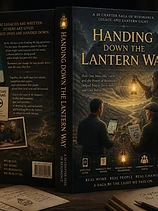

Handing Down the Lantern Way
Chapter 1
Our story begins with a phone call.
Not the kind you make to place an order, or to check on store hours, or to ask whether they are still serving lunch. This one came from Steve Jansen — age seventy-eight, resident of Glowing Halos Retirement Community — placed to the local burrito shop. He was not calling for a burrito. He was calling for a favor. And there is a difference, though both require someone willing to pick up the phone.
On the other end stood his nephew, Tim Heimkin, who had just finished arranging a tray of foil-wrapped lunch orders. The steam table hummed softly to itself, the way appliances do when they have long since given up trying to be noticed. For nearly thirty years — ever since Timmy was a teenager — Steve had called him once or twice a week. A rhythm so established it had stopped feeling like communication and started feeling like weather.
Back then, Steve was head of the IT Department at Lantern Way Industries, a quietly serious organization, non-official and government-adjacent in the loosest possible sense, known in certain circles as one of the foremost purveyors of the world's finest miniature pamphlets. Which is a sentence that sounds like it is joking right up until you understand what it means.
Lantern Way did not make books. They made pamphlets — trifold, pocket-sized, informative little publications you could find almost everywhere if you knew to look: church foyers, grocery store bulletin boards, DMV counters, the glovebox of every car built before 1999. They were, in their quiet way, ubiquitous. Furniture of the civilized world. The kind of thing you never noticed until it was gone, and then you noticed its absence in a way you could not quite name.
And young Timmy — back when he still answered to that name without wincing — spent his afternoons on the information superhighway, studying the source code of every website he could find the way a naturalist studies bird calls. While other kids saved their lawn-mowing money for SimCopter or Duke Nukem 3D, Timmy saved his dollars, quarters, dimes, nickels, and pennies for Paint Shop Pro and Macromedia Dreamweaver. He was, without quite knowing it, becoming fluent in the new language of the world. The way children often become fluent in things before the world has had a chance to tell them those things are difficult.
When Steve saw what Timmy could make — smooth-edged graphics, drop-shadows that actually hugged the shape of an image instead of floating behind a white rectangle like a shy ghost — he knew the boy had something. Steve himself could only manage pages with tiled backgrounds and beveled table borders in Microsoft FrontPage. But Timmy could make something that looked, against all reasonable expectation, like the future.
And so their working relationship began: an uncle and a nephew, a pamphlet man and a web prodigy, held together by the particular tenderness of two people who have found in each other a willing audience. That relationship carried through thirty years, a collapsed industry, two or three different kinds of obsolescence, and all the way to this phone call — from a quiet room at Glowing Halos, where Steve Jansen still believed, without apology, in pamphlets and the quiet dignity of a well-made trifold.
The Pamphlet Itself
Before we return to Steve and Timmy, we should pause. Not for long. Just long enough to let something settle.
Because to understand why Steve calls the burrito shop at all — why he still talks about pamphlets to anyone who will sit still — you have to understand the pamphlet itself. Not what it became, but what it always was.
When most people hear the word pamphlet, they picture three things: medical brochures in clinic waiting rooms, tourist information at highway rest stops, and retro advertising dense with exclamation points. But pamphlets were not invented in the 1980s, or the 1900s, or in America. The word itself comes from a medieval love poem — Pamphilus — copied so many times, passed through so many hands, that its name became shorthand for any short, portable piece of writing meant to be shared. And shared they were.
By the twelfth century, pamphlets had become humanity's preferred way of speaking to itself. They carried sermons and warnings, recipes and political manifestos, travel advice and medical tips and the occasional scandalous rumor. They were the original share button, passed from hand to hand, pocket to pocket, village to village. Anyone with a pen and a scrap of paper could make one. Everyone from farmers to kings read them.
There is something almost embarrassingly beautiful about that. The same object that warned you about a bad harvest could also argue the nature of God, and both could fit in your coat pocket. For seven hundred years, the pamphlet was how the world kept its own counsel.
Then, roughly twenty-five years before this phone call, we stopped. Not gradually. Not with any ceremony. Just — suddenly. The internet arrived, and the pamphlet era ended almost overnight. Which is worth sitting with for a moment, if you do not mind. Every generation before ours, for something like seven centuries, got by on pamphlets. They trusted them. They tucked them into hymnals and coat sleeves and gloveboxes. They folded them and passed them on. And then one morning, more or less, they did not.
Steve Jansen was one of the last people who truly believed in them. Not as nostalgia. Not as an aesthetic. He had lived inside the pamphlet era long enough to breathe its particular air, to understand its particular faith — which was simply this: that an idea small enough to fold in thirds and slip into a stranger's hand was not a lesser idea. It was a distilled one. A clarified one. The kind of idea that had been patient enough, and humble enough, to wait until it could be carried.
Which is why, when he calls Timmy from Glowing Halos, it is never quite just a phone call. It is, in some harder-to-name way, a message from a vanished world. A trifold, pocket-sized message, delivered by telephone, to a man standing at a steam table with foil on his hands.
The Ask
And so we return to the moment itself. The burrito shop. The ringing phone. Tim Heimkin, apron still on, hands warm from wrapping foil, answering a call he already knows is not about lunch.
"Chipotle, this is Tim," he says, out of habit.
On the other end, in a quiet room at Glowing Halos, Steve Jansen clears his throat — the way he always does before asking for something important. A small, preparatory sound. Like a man straightening his collar before delivering news he has been rehearsing all morning.
"Timmy," he begins, "the old design just won't cut it for the 2020s. It held up fine for nearly thirty years, but people nowadays don't want all the blinking do-dads or NDADs anymore. They want fancy logos and —" a brief pause, the word arriving with mild suspicion, as though he had heard it used in a meeting once and never quite trusted it — "functionality."
Tim blinks. "Uncle Steve? Oh wow. That driver-reporting accountability site still exists? I almost forgot about that."
And it was true. Even after the Lantern Way Pamphlet Bureau had shut down its presses — around the same time as the Great Pamphlet Collapse of 2001 — the Lantern Way IT Department had quietly kept the NDAD running. The National Driver Accountability Database. Still online. Still paying rent on a corner of the internet nobody much visited anymore. There had been another program too, the PDARI, the Professional Driver Accountability and Reporting Index, or something close to that. Even Steve probably could not have said what the acronym stood for anymore. Some things outlast their own explanations.
Lantern Way Industries itself barely existed now — just a name on a power bill somewhere. The old office building still stood, but it housed a WeWork these days, full of laptops and kombucha taps instead of pamphlet presses. The presses were gone. The pamphlets were gone. The NDAD, somehow, remained. Like a single candle left burning in a house after everyone has gone to sleep, casting its small glow on nothing in particular, waiting.
"Okay, Uncle Steve," Tim said at last, his voice softening in the way it always did when resistance became more trouble than love. "I'll try to log in. I think I remember my password. I'll make the minimal version you want. But let's keep that stone-aged design as an artifact of the way things were."
Steve did not respond right away, so Tim kept talking — the way you do when you are filling silence for someone you love and the silence is a little too quiet to trust.
"Uncle Steve, you really cannot keep calling me at work so much. I am glad to talk, but managing this place is not nothing. And I have not updated that site in twenty-three years. I cannot believe you still pay for hosting. I cannot believe you kept that domain alive."
The line was quiet. Not the quiet of a dropped call, but the deeper quiet of someone on the other end who has already said what they came to say and is now, very gently, falling asleep. Steve Jansen, age seventy-eight, former IT manager, last true believer in the trifold pamphlet, was drifting off mid-conversation — the way a candle does not blow out so much as simply, slowly, decide it has given enough light for one evening.
Tim held the phone a moment longer than he needed to. The steam table hummed. The foil crinkled under his palm. Outside, somewhere on a county road he had not yet thought to care about, a car was already moving in a direction that would eventually lead him here — to this mission, this house, this server still blinking in a basement like a sleeping monk waiting to be found.
He did not know any of that yet. He only knew his uncle's breathing on the other end of the line, slow and even, and the particular feeling of being trusted by someone who has been carrying something alone for a very long time.
The Nurse's Voice
The conversation had reached the particular kind of ending that is less an ending than a dissolving. Tim was still there, still saying the reasonable, warmhearted things a nephew says — about the pamphlets, about the stickers, about the ten dollars and forty-three cents per year it cost to keep a dream nominally alive on the internet — and then the voice on the other end of the line changed, and everything grew very quiet and very clear, the way a room does when someone lights a single candle and you realize you had forgotten what light actually looks like.
"Tim? This is the nurse."
He straightened without meaning to. The posture of a man receiving news he cannot yet categorize.
"Your uncle fell asleep," she said. Her voice was warm the way good coffee is warm — not scalding, not performative, just genuinely, quietly warm. "He'll have to call you another time. Is this Timmy again?"
Tim smiled. Not the kind of smile you manufacture for customers, but the other kind. The involuntary kind. "Yeah. It's me."
"I think he calls you when he can't get to sleep," she continued, almost as an aside, the way people share true things. "Hearing about the pamphlets helps him drift off. He took real pride in that era. He tells the other residents that pamphlet-reading increases longevity." A small pause, a warmth inside the warmth. "He says it all the time."
And then, before hanging up, she added the thing that is perhaps easiest to overlook and therefore the most important: "Oh, and Tim? I appreciate how you always hook up that extra side order of hot sauce. That means a lot to me. I'll be seeing you at lunchtime."
The line went quiet. The steam table hummed its low, indifferent hum. The foil crinkled once beneath Tim's palm and then was still.
He stood there a moment longer than he needed to, holding the phone, thinking about pamphlets that increase longevity and a man who had discovered that the best sleeping aid in the world was the sound of his own life's work being spoken back to him by someone who cared. And thinking, too, about hot sauce. About the small daily gestures that reach people in their actual lives — not the grand ones, not the movements or the manifestos, just the extra side order, the remembered preference, the thirty-cent kindness slipped into a paper bag without ceremony or expectation.
Isn't it something, the way the universe issues its receipts? Not in gold letters. Not at award ceremonies. But in a nurse's voice at the tail end of a phone call, noting that a small thing you did made a difference to her day.
The Legend of the Great Pamphlet Collapse
There is a piece of family lore that Steve Jansen told every Thanksgiving and every Christmas, twice a year without fail, with the solemnity of a man delivering a eulogy for something that had not quite finished dying.
It was called the Great Pamphlet Collapse of 2001.
Before we follow Tim any further into the quiet inheritance Steve was pressing into his hands, it seems right to sit with this story for a moment. Because every story worth telling has an older story folded inside it, small and patient, like a trifold tucked into a coat sleeve — waiting to be opened by the right pair of hands at the right unhurried hour.
If you ask most people about 2001, they will mention the dot-com bust, the startups that folded, the servers that went dark. Venture capital evaporating the way frost does — not dramatically, just gone by mid-morning as though it had never been solid to begin with. A mythology of hubris. A cautionary tale the internet loves to tell about its own younger self.
But in the Jansen family, the story was told differently.
"The internet didn't just crash," Steve would say, with the quiet authority of a man who had been present for the thing he was describing. "It pivoted."
And he meant it, in the way that only people who have lived through a pivot can mean it. Because in those days pamphlets were still everywhere. Church foyers and grocery stores and tourist kiosks and the DMV counters of the world, those long-suffering cathedrals of civic patience. Lantern Way's presses ran day and night, folding trifold after trifold, sending small paper packets of roadway wisdom out into the hands of anyone who cared to reach for one. The whole operation had the feel of something load-bearing — something stitching the ordinary world together in ways nobody stopped to name because naming it would have felt like explaining why water is wet.
Then came the recession. And in the scramble to survive it, the internet did what it had always been best at, which was to reinvent itself without asking anyone's permission. Graphics improved. Pages loaded faster. And suddenly a digital pamphlet — a static page with a friendly diagram and a font your grandmother could read — was just as useful as the printed one. Better, even. And it was free.
That was the collapse. Not an explosion. Not a cinematic finale. Just a quiet, unstoppable shift in the weather, the kind you do not notice until you are already cold and wondering when the season changed. The world moved from paper to pixel, and Lantern Way's presses slowed, then faltered, then fell into a silence so gradual it almost passed for peace.
Steve always said it felt like watching a beloved old tree fall in slow motion.
"Pamphlets were the backbone of civilization," he would say, carving the Thanksgiving turkey with the measured gravity of a man issuing a verdict that had taken him decades to arrive at. "And the internet, bless its heart, didn't mean to destroy them." A long pause. The carving knife hovering. The assembled family waiting. "It just became them."
Whether the story was historically accurate was never really the point. History rarely is, at the level where families actually live. What mattered was the telling of it — the annual ritual, the carving knife, the particular way Steve's voice softened on that final phrase, as though he were forgiving something he still did not quite understand, and had decided that forgiveness was more useful than understanding anyway.
Tim grew up hearing the Great Pamphlet Collapse of 2001 twice a year, every year, until he could have recited it himself in the dark. Until it became less a story and more a kind of weather. The climate of the family. The atmosphere inside which everything else — the holidays, the arguments, the ordinary accumulation of years — occurred.
And so when a phone rings mid-shift at a Chipotle in a strip mall and a voice comes down the line from Glowing Halos asking about a website built in the very twilight of the pamphlet era, it is not nostalgia, exactly. Nostalgia is the ache for something you know is gone. This was something subtler and stranger than that. Something more like the recognition that a story which began long before either of them had the vocabulary to tell it had simply not finished telling itself yet, and had chosen, for reasons of its own, to continue here — in fluorescent light, over a counter smelling of cumin and warm tortillas, with the next chapter waiting quietly in Tim's hands like a pamphlet he had not yet thought to unfold.
The Drive Home
Tim stepped out of Chipotle into the late-afternoon light — that particular honey-colored softness that arrives around 5:17 in early September, when the sun has dropped just low enough to make the asphalt look almost blue and the whole world seems to be breathing out after a long day of holding itself together.
The air carried cumin and warm tortillas, the kind of scent that clings past the end of a shift, past the apron on the hook, past the parking lot and the familiar cracks in the pavement and the little patch of grass near the curb that always seemed, against considerable odds, to be trying its best.
His car waited for him — a silver Prius with a slightly cloudy headlight on the passenger side, the kind of small imperfection that makes a car feel like a companion rather than a vehicle. He slid into the driver's seat and let the quiet settle around him. The soft, polite chime when he pressed the start button. The steering wheel under his hands. The particular stillness of a car before it moves, which is its own kind of contemplative state.
He did not pull out right away.
He sat there thinking about the phone call and the nurse's voice and a man who had been talking about pamphlets for so long that the sound of it had become a lullaby. Thinking about the ten dollars and forty-three cents per year it cost to keep a belief alive on the internet. Thinking, without quite meaning to, about what it means to carry something alone for a very long time.
Then he shifted into reverse and began the familiar drive home.
County Road 75
County Road 75 was quiet at this hour, the way roads in small Midwestern towns go quiet in the evening — not empty, exactly, but unhurried, the traffic thinning to the occasional pickup or minivan moving at the measured pace of people who have somewhere to be but are not in a hurry to prove it. The sky was going lavender at the edges. The trees along the roadside were beginning their slow collapse into silhouette.
Tim kept the Prius at a steady forty-eight miles per hour. Not fast, not slow. Steady. The limit was fifty, and he had learned long ago — from Steve, from the pamphlets, from the particular liturgy of the Jansen household — that a speed limit means the maximum, not the minimum, and that there is no shame whatsoever in treating it as exactly that.
He had almost let himself relax when he saw them.
A pair of headlights in the rearview mirror. Bright. Close. Much too close.
The truck behind him surged forward and held there, riding his bumper with the practiced, impersonal aggression of someone who had decided that the lane ahead of them was being wasted by the wrong person. The headlights filled the mirror and turned it into a rectangle of pure white pressure. Tim felt the familiar tightening — not fear so much as a weary, bone-deep recognition. The recognition of a man who has been here before. Who has stood in this particular weather many times and knows its patterns.
He kept his speed steady. He always did.
The truck inched closer. The light in the mirror grew brighter. And then — quietly, without ceremony, the way important things tend to arrive — something inside Tim shifted.
A memory rose.
The Steady Hand
There was a memory, and it rose the way memories do when the body needs them most — not summoned, not chosen, just arriving. The way a song finds you on a Wednesday.
He was twelve years old. The passenger seat of Uncle Steve's Ford Taurus SHO Wagon — a car so improbable that most people, seeing it parked at a gas station, would have walked right past without suspecting a thing. It looked like an ordinary wagon. It was not an ordinary wagon. Three-point-two liters. Double overhead cams. Two hundred and twenty horsepower, tuned by Yamaha, sleeping quietly under a hood that made no promises and kept all of them.
Steve had one hand on the wheel.
The other rested on the shifter the way a conductor's hand rests before the downbeat — not gripping, just present. Ready.
He said, without looking over, in the unhurried voice of a man stating something he considered simply true: a car should be powerful enough to merge safely, Timmy, but gentle enough to never frighten anyone.
The SHO glided down County Road 75 as though it had always lived there. No drama. No urgency. Just the low, steady hum of an engine that had nothing to prove and knew it. Tim had felt something settle in his chest that afternoon — some quality of the air in that car, some frequency Steve carried — and he had never quite found the words for it until right now, here, in the unblinking white of a tailgater's headlights on the same road, twenty-six years later.
County Road 75, 1999
But another memory was already rising through the first, the way light layers through water.
He was sixteen. Steve had taken delivery of a silver Honda Insight — one of the very first off the line, an aluminum teardrop of a machine that got seventy miles to the gallon and looked like something a civil engineer had dreamed while falling asleep at a science fair. The future, in beige and silver, sitting in an ordinary Midwestern driveway.
Steve had tapped the hood with something very close to reverence.
Economic fuel efficiency, he said. This is how we'll drive from now on.
Tim borrowed it one Saturday morning and pointed it down County Road 75. The Insight made almost no sound — a tuning fork barely struck, a hum so faint it felt more like an intention than a noise. The road opened ahead of him in the blue morning, quiet and unhurried, and something in Tim made a quiet decision.
He became a hybrid person that day. Quietly. Without ceremony. The way most permanent things happen.
The Realization
The truck behind him surged closer. The mirror was nothing but light now.
And something came clear.
It arrived the way clarity tends to arrive — not with fanfare, not with a voice from the clouds, but with the small, almost domestic click of a thing falling into its proper place. You know that sound. A cabinet door latching. A key finding a lock it was cut for.
This was why.
This was why Steve kept the NDAD alive through every quiet year of its obscurity, why he still folded trifolds at eighty-something dollars a year plus a ten-dollar-and-forty-three-cent domain renewal, why he called from Glowing Halos in the voice of a man with one last errand. This was why he believed, with the mild and unshakeable faith of someone who has seen the evidence, that a pamphlet placed on a bulletin board at a grocery store could eventually reach the nervous system of a town.
The NDAD was never just a website. It was a message written in trifold, in sticker, in domain record, in the patient hum of a server running in a basement for decades. A message that said: you don't have to be frightening. You don't have to be in that much of a hurry. The limit means maximum. The road is for everyone.
The truck flashed its brights.
Tim did not flinch. He felt the click settle through him, warm and resonant, and he understood — with the particular understanding that lives in the chest rather than the head — that the story was not finished. That the pamphlet era was not finished. That Steve was not finished.
And neither was he.
The truck eventually roared past in a burst of impatience, swallowed quickly by the lavender dusk ahead. Tim watched its taillights shrink and disappear and felt, strangely, no bitterness. Only the long, unhurried road and the steady, gentle hum of a car with nothing to prove.
He kept his speed at forty-eight.
He always did.
Chapter III — The Quiet House
The next Saturday arrived with the particular quality of light that feels like permission — cool air, soft sun, a sky the color of old denim washed so many times it had become something gentle. Tim parked in front of Steve's house and sat in the car for a moment, engine idling, looking at the place.
The siding had faded to a pleasant beige, the color of a memory left in mild sunlight for twenty years. The gutters sagged with the patient, dignified exhaustion of things that have done their job without complaint for a very long time. The front steps, Tim already knew, would creak on the second one — a small, familiar sound, like the house clearing its throat in greeting.
He unlocked the door and stepped inside.
The house was quiet in the way that isn't empty. More the way a library is quiet, or a chapel on a Tuesday afternoon — present, held, waiting to be useful. Dust motes drifted through the shafts of window light, each one moving at its own unhurried pace, as though time in this house kept a different standard.
Tim set his keys on the counter, took one breath of the air — old paper, warm wood, faint traces of the 1990s still living in the walls — and began.
The Living Room
The living room looked very nearly as it had in 1998. The floral couch. The oak coffee table with its ring-shaped memories. The framed photograph of Steve standing beside the Lantern Way Pamphlet Bureau sign, holding a freshly printed trifold with the careful, proud ease of a man holding something he has made with his hands and his whole heart.
Tim moved through the room slowly, touching things as he went. The back of the couch. The edge of the table. The corner of the frame. Everything had the particular weight of the handled and the loved.
He found a box labeled Pamphlets — Last Rounds of Printing and opened it. Inside were trifolds stacked in neat rows, still folded, still crisp, smelling faintly of ink and of time. The Courtesy of the Road. A Message From Above. The Limit Means Maximum. Winter Driving Wisdom. The Calm Driver's Pledge.
He lifted one and held it. Felt the paper. Read it slowly, in the unhurried way one reads something written by someone who meant every word.
He stood there for a moment longer than he needed to. Then he set it gently back on the stack and moved on.
The Kitchen
The kitchen was a museum. White laminate counters. A refrigerator covered in magnets from places Steve had never actually visited but had clearly considered, once, with intention. A ceramic bowl shaped like a pumpkin, sitting on the counter beside the window, holding a small stack of NDAD stickers — black text, yellow background, the Lantern Way logo small and confident in the corner.
Tim picked one up and held it to the light coming through the window.
He thought about Steve printing these in the old Lantern Way office, two decades ago, in some version of this same afternoon light, believing with the same mild certainty that a sticker placed in the right window at the right moment might arrive in someone's rearview mirror on a bad day and remind them — softly, without judgment — of who they actually wanted to be.
He set it back in the pumpkin bowl, gently, the way you set something back that deserves to be found again.
The Hallway
The hallway smelled of old carpet and warm dust, and its walls held Steve's life in frames. Steve in his Lantern Way polo. Steve at a Thanksgiving table sometime in the early aughts. Steve holding a pamphlet in both hands, the way a minister holds a text he has read so many times it has become part of his breathing.
Tim stopped in front of one particular photograph.
Steve was standing beside a silver 1999 Honda Insight in a driveway flooded with summer light, smiling the way a man smiles when he is absolutely certain he is living in the right direction. The aluminum body caught the sun like something that had arrived from somewhere more considered than the present.
Tim put his fingers on the edge of the frame.
He remembered that driveway. He remembered the sound the car made, or rather the sound it almost didn't make — the gentle hum like a note held just below hearing. He remembered County Road 75 in the early morning, that first quiet run in the machine, and the way something in him had settled permanently into a different register.
He had been a hybrid person ever since. It was that simple and that complete.
The Basement Door
He found the basement door at the end of the hall. It was slightly ajar — not open, not closed, but resting in that particular in-between position that doors sometimes hold, as though the question is still being considered.
Tim put his hand on the knob. It was cool, the way old metal is cool, the way certain handles feel familiar in the palm before you even remember why. He pushed the door open and the smell rose to meet him — old paper, cardboard, concrete, and something deeper underneath all of it, the particular smell of time itself.
He descended slowly. Each step gave a low, ceremonial creak, as though the house were narrating his arrival.
The Hum
The basement was lit by a single pull-chain bulb, its circle of warm gold spreading just far enough to show rows of boxes labeled in Steve's handwriting. Pamphlets, 1997. Pamphlets, 1999. NDAD Stickers. PDARI Forms. Lantern Way Archives. Tim walked through the rows the way you walk through a library that was never open to the public — slowly, reverently, aware that everything here was catalogued by someone who believed it mattered.
He opened a box labeled Pamphlets — Rescued After Collapse. Inside were trifolds from Lantern Way's final days, the last printing before the presses went silent. He lifted them one by one, reading titles, feeling the texture of paper that had been held and folded and meant to travel and never quite got the chance.
Then he heard it.
A hum. Faint. Steady. Mechanical and patient and alive. The sound of something that had never been told to stop.
It came from the far corner of the basement.
Tim turned.
There, on an old metal table beside a stack of rescued pamphlets, sat a beige box. Dusty and unmarked and thoroughly ordinary in every way that a thing can be ordinary except one. It was still running. Still humming. Still hosting, in its patient and anonymous way, the NDAD website — still doing the quiet work of a mission that the rest of the world had largely forgotten to notice.
It had been running, alone, in the dark, for years.
Tim stood very still and listened to it hum. And it occurred to him, in the slow and wondering way that only basements and late afternoons permit, that some things do not need to be witnessed in order to continue. That a light left on in an empty house is still a light. That a signal broadcast into silence is still a signal.
That the pamphlet era, as it turned out, had never actually ended.
It had just been waiting for someone to come downstairs.
The Weight of a Warm Case
Tim walked toward it slowly, the way you approach a relic.
He touched the top of the case.
It was warm.
And isn't that the strangest thing, when you think about it. Not that it was still running. Not that it had outlasted so many louder and more celebrated machines. But that it was warm. That warmth is the evidence of work. That work, even unwitnessed, even unrewarded, even down here in the dark beneath a house that had been mostly quiet for years, leaves heat behind it like a signature.
He stood with his palm flat against the case and understood something he could not quite say out loud.
Steve hadn't been paying for hosting because the hosting was right here.
The domain had never expired because nothing had ever been handed off. The stickers that kept arriving, the calls from Glowing Halos, the persistence, the decades of quiet devotion — all of it had a root, and this was it. This warm, dusty, thoroughly ordinary box. Still serving. Still believing. Holding the whole thing together with nothing but patience and electricity and the particular stubbornness of a thing that was never told to stop.
Tim felt something settle inside him, the way a door settles into its frame when the house finally stops shifting. Not a revelation. Something quieter than that. A click. Small and mythic and unmistakable.
He understood what he had inherited. Not the house. Not the domain. Not even the mission, exactly.
This. A hum in a basement. A signal nobody had cancelled. A story that had never actually reached its ending.
The Drive Home
He left Steve's house with the basement smell still in his clothes, that particular combination of cardboard and old concrete and the faint mineral exhale of machines that have been working alone for a long time. The sun was lower now, turning everything peach and lavender at the edges, the sky doing what skies do in Minnesota when they want to remind you the world is still lovely and mostly not paying attention to itself.
His Prius pulled away from the curb in its characteristic silence. Electric motors have a way of matching a mood that gasoline cannot quite manage, and the mood right now was slow and interior and full of something that had not yet become a thought.
He drove without the radio. The hum of the server was still in his mind, and he did not want to cover it over.
There is a kind of slowness that is not laziness and not hesitation. It is more like reverence. The way you walk through a space you know you will remember. He drove that way, letting the blocks pass at their own pace, letting the afternoon be what it wanted to be.
Iron Turtle, Sleeping
Tim's apartment sat above a small insurance office, beige siding, a sign bleached by seasons into something almost pastel, stairs that creaked in a friendly way on the third step up. He unlocked the door and stepped inside. Coffee grounds. Citrus cleaner. The particular warmth of a space that has been waiting for you without worrying about it.
His desk sat in the corner beneath a lamp with a warm bulb. And beside it, the homelab rack, tall and black and patient, half-finished in the way that certain honest projects are half-finished, not from abandonment exactly, but from the absence of the right reason to continue.
It looked like a sleeping animal.
He had stopped working on it one hot afternoon, the kind where the air feels like a hand pressing gently down on your shoulders, and he had convinced himself that what he was building was already obsolete, that everything meaningful had migrated somewhere farther away and faster and more expensive than what he had. He had unplugged the cables and stacked the servers and told himself he would come back to it.
That was the thing about later. It never announced itself as permanent. It arrived so softly you almost didn't notice it becoming years.
But now he walked toward the rack slowly, the way you approach a thing you owe something to, and he touched the top node the same way he had touched the UNIX case.
Cool. Still. Waiting.
He exhaled long and low.
The Notebooks
He sat at the desk and opened a drawer and found what he had left there, a small notebook labeled Cluster Plans, Iron Turtle. Inside were diagrams in neat and careful pencil, nodes and switches and airflow paths, notes about RAM, annotations that had the handwriting of someone who was genuinely enjoying themselves. And there, on the bottom corner of one page, a small drawing of a turtle wearing sunglasses.
He smiled the way you smile when you meet an earlier version of yourself and find you still like them.
He reached for the first server. The rails made that soft familiar sound, like a drawer in a desk that has been opened many times by a careful hand. He set it on the table and pressed the power button and the machine remembered itself, fans spinning up, lights appearing one by one, a small warm crescendo filling the room.
It was not a dramatic sound. It was a comforting one. The sound of potential becoming presence.
He connected the chartreuse DAC cable, the one that always looked slightly too cheerful for the occasion, the kind of color that insists on being noticed. He plugged in the Mellanox NIC. He tightened the screws. He checked the airflow.
He powered on Node Two. Then Three. Then Four.
One by one the servers woke, humming and blinking, aligning to one another with the patience of things that were designed to agree. The room filled with a soft chorus, LEDs running green and amber and soft blue, fans settling into their steady register.
Tim sat back and watched the lights move across the rack.
He whispered it quietly, to nobody in particular, which is often the right audience for the things that matter most.
Okay, Uncle Steve. I see it now.
What the Hum Knew
There is a question worth sitting with, here in the lamplight with the servers breathing and the old relic box warm on the desk beside the new machines. The question is simply this. What is the difference between a machine that is running and a machine that is alive.
The UNIX box in the basement had been running alone for years. And yet it had not felt abandoned, standing there in the dark. It had felt attended. As if the act of continuing was itself a form of presence. As if Steve's intention, folded into that machine decades ago, had never quite departed.
Which raises the possibility that purpose is not something you bring to a thing and then take away when you leave. That it might be something the thing holds onto for you. That a server can carry a mission the way a letter carries a voice, long after the hand that wrote it has gone still.
Iron Turtle would carry something forward now. Not a cloud future or a GPU future or a future built on speed and spectacle. A Lantern Way future, built on the same values that had kept a basement server humming for twenty-five years, that had folded a thousand pamphlets by hand, that had, against all probability and without any audience to speak of, continued.
Courtesy. Coherence. Quiet dignity.
Small things, patiently meant.
The Companion
Tim opened a new document on the thin silver laptop, the one whose screen glowed like a small and private sunrise. He did not know exactly what he was building yet. He only knew it needed to exist, and that it needed to be gentle, the way the Lantern Way itself was gentle, present without demanding, helpful without needing credit.
He typed slowly, letting the code arrive the way a story arrives, one word choosing the next.
A form. A button. A place to enter a license plate. A place to leave a message. A place to ask for a sticker.
He was not rebuilding the NDAD. He was building something beside it, a companion, a modern pamphlet, a way for the hum to reach the world in the language the world currently spoke.
He named it CalmDrivers. The Courtesy Portal.
He smiled at the name the way you smile at something that arrived already finished, that did not require your help to know what it was.
Morning Light
He woke the next morning without an alarm, the way you wake when something in you has already decided the day is worth attending to. The light came through the blinds in those particular golden stripes that make a room feel like a warm envelope, soft and received and quietly held.
The servers were still humming.
He sat on the edge of the bed and listened to them for a moment before moving, the way you might sit with a good dream before letting it dissolve into the morning. Then he padded across the floor in his socks and stood in front of the rack, looking at the blinking greens and blues, the tiny lights that had kept their vigil through the night without being asked.
On the desk beside the rack the UNIX box sat warm and steady, a little shy-looking next to the sleek black servers, like an old librarian who has found herself seated at a table of bright young professionals and is entirely unbothered by this.
Tim placed his hand on it.
Warm. Steady. Patient.
And beside it, the thermal label printer sat compact and ready, the kind of machine that receives instructions and produces small tangible things and asks for nothing more complicated than that. Old and new together on the same desk, two eras in quiet conversation, neither one trying to win.
He made coffee. He sat down. He opened the laptop.
There was work to do, and it was the kind of work that felt less like effort and more like tending. The kind you return to the way you return to a garden, not because it demands you but because something in you requires the act of returning.
The homelab hummed around him, warm and awake and ready.
And so, at last, was he.
The Sound of the Printer
He connected the thermal printer and fed in the first roll of blank labels. The machine made a small friendly chime as it woke, then a soft whirring sound, the kind a creature makes when it is stretching after a long sleep and is genuinely pleased about it.
The first test label slid out warm, smelling faintly of heated plastic. Black text, clean lines, a small Lantern Way logo nestled in the corner like a signature on a letter you actually meant to send. Tim held it up to the light and turned it slowly, the way you turn a thing when you want to look at it without quite admitting you are doing so.
It felt right. Not impressive. Not revolutionary. Just right, which is the quieter and more lasting of the two.
And isn't that funny, how the things that stay with us are rarely the ones that announced themselves loudly at the door.
A memory rose, soft and unhurried, the way memories do when you stop running fast enough to let them catch up. Steve's desk at Lantern Way in 1998. Stacks of warm trifolds. A beige monitor with a slight lean to the left. A dot-matrix printer that sounded exactly like a mechanical cricket in a summer field, steady and rhythmic and entirely self-satisfied. A mug on the corner of the desk that read "Pamphlet People Are People People," and nobody questioned it because nobody needed to.
Tim remembered being a boy beside that desk, watching his uncle run the final rounds of trifolds before everything got quiet. The smell of ink. The hum of the printer. The particular quietness in Steve's eyes that was not silence but fullness. The look of a man who has found his work and made his peace with it.
The new printer made a similar sound. Softer, cleaner, smaller. But underneath the difference, something unmistakably the same. The way a river sounds like a river whether you are hearing it for the first time or the hundredth.
Tim let the warmth settle in his chest without explaining it to himself. Some things understand themselves just fine without your help.
The Second App
He opened another blank project and sat with it for a moment the way you sit with a door before you decide to knock. This one felt different from the first. More playful. More openly hopeful. Less like a directory and more like an invitation.
A map. A route tracker. A gentle way of noticing and naming the small courtesies that happen on ordinary roads between ordinary people who will never know each other's names. He imagined County Road 75 at dusk, the light going amber over the fields, someone yielding at a merge who did not have to, a cyclist receiving a wide berth and lifting a hand in the old wordless language of acknowledgment.
He named it CalmDrivers, The Good Road Map.
He chose soft colors. Warm oranges. Gentle blues. The muted green of a lawn at the end of a long summer afternoon. Colors that felt less like a design choice and more like a temperature. He placed a small turtle icon in the corner with sunglasses that were entirely optional and entirely correct, and he smiled at the screen the way you smile at something that arrived before you thought to ask for it.
The Third App
The third project came almost on its own, the way the right ideas tend to arrive once you have stopped insisting on them.
A place for stories. A place for pamphlet lore and quiet wisdom and the kind of gentle knowing that does not travel well on networks built for urgency. Not a website, exactly. Not a blog or a forum or a feed. Something older and warmer than any of those. A digital pamphlet rack, a place where trifolds could live again without apology, where the ideas Steve had folded by hand for thirty years might quietly find new readers in the patient way that seeds find new soil without ever having to hurry.
He named it CalmDrivers, The Lantern Way Library, and he typed the name slowly, giving each word its proper weight.
The Relic Watches
The UNIX box hummed beside him, steady and warm, patient the way old things are patient when they have already outlasted everyone's expectations and have decided to simply enjoy the extra time.
It felt, in its way, like it was watching. Not supervising. Approving. Remembering on behalf of everyone who had forgotten.
Tim leaned back and let the sound of the machines fill the room, the hum of the rack, the quiet breath of the printer, the warm glow from the laptop screen, the old box beside it all holding its particular frequency like a tuning fork nobody had put down. The room felt like the kind of place where a story stops rushing and sits down to rest. Like a nap that is also a beginning.
He exhaled slowly. The long Lantern Way kind.
He did not say anything out loud. He did not need to. The machines hummed. The light held. And the work that had been waiting for someone to return to it was, at last, being returned to.
Chapter VI — Steve Moves In
The call came on a Wednesday morning, the kind where the sky looks like a sheet of pale paper and the sun is still considering its options. Tim was at his desk with gas-station coffee one shot past reasonable, watching the servers run their quiet morning routines, when his phone lit up with a name he recognized instantly.
Glowing Halos Retirement Community.
He answered.
It was the nurse, the one with the warm voice, the one who had always liked the extra hot sauce. She told him that Steve was still sharp, still talking about pamphlets with anyone who would listen, still telling the other residents that regular reading of courtesy literature was strongly associated with increased longevity. But he was tired, she said. Getting around was harder. He kept mentioning Tim's name. More than once. More than twice.
Tim looked at the rack without meaning to. The greens and blues blinking gently. The UNIX box warm and steady on the desk. The three new apps open side by side on the laptop like three small doors into the same large room. He felt something in his chest that was not quite a decision because decisions are effortful things, and this did not require effort. It had already been decided somewhere deeper than the place where decisions happen.
"Yeah," he said quietly. "He can come stay with me."
And that was that.
The Arrival
Two days later, Tim drove the Prius to Glowing Halos, the hybrid humming its soft electric hum down streets still cool from the night before. The building was beige and wide-windowed with a little garden of marigolds and hostas out front, the kind of place designed to feel comforting, and mostly succeeding.
Steve was waiting in the lobby. He sat in a chair near the door with a pamphlet open in his lap, "The Courtesy of the Road," one of his old favorites, its edges softened by time. He looked small in the chair, the way people sometimes look small in chairs that are too large and too beige. But his eyes were entirely bright.
"Timmy," he said, and smiled.
Tim hugged him gently and carefully, the way you hold something you understand to be both fragile and extraordinarily durable at the same time, and helped him out to the car. Steve moved slowly, but with the particular purposefulness of a man who has decided to begin a new chapter and is not about to be rushed into it.
The drive home was quiet. The Prius hummed. The road stretched between the trees like a warm ribbon. Steve watched the passing fields with his hands folded in his lap, his breathing steady, his expression somewhere between tired and arrived. At one point, without turning from the window, he said:
"You always did drive like a pamphlet person."
Tim smiled and said nothing, which was the right answer, and he knew it, and Steve knew it, and the road knew it, and that was enough for everyone.
The Apartment Becomes a Home
Tim had spent the days before the drive quietly rearranging things. A comfortable recliner angled toward the window. A small bookshelf at a reachable height. A soft blanket folded over the armrest the way blankets are folded when someone has thought about the moment in which another person will find them.
Steve stepped inside slowly and looked around with the quiet curiosity of a man who is not appraising a room but allowing a room to introduce itself. His eyes moved across the warmth of the lamplight, the friendly corners, the purposeful hum that filled the air like a held note.
Then his eyes found the rack.
He walked toward it, steady and slow, and placed his hand on the metal frame the way Tim had placed his hand on the UNIX box that first morning. Something in the gesture recognized something in the gesture. His gaze moved to the beige box on the desk beside it.
"You woke them up," he said softly.
Tim nodded.
"And you brought the relic." He rested a finger on the old box. "Good. That one still has stories in it."
He settled into the recliner then, exhaled with the full weight of his body, and closed his eyes. The hum of the servers filled the room like a breath finally, fully, released. Like a sound that had been waiting a very long time to be heard by the right ears.
The Kitchen Table Workshop
That first evening was quiet in the way good evenings are quiet, meaning not empty but full of the kind of things that do not need to be spoken.
Tim made dinner. Simple things, warm things. Mashed potatoes gone a little too creamy in the best possible way. Green beans. Chicken breast seasoned with nothing more complicated than salt and pepper and attention. Steve ate slowly, with the deliberate pleasure of a man no longer pretending that meals are primarily about nutrition.
After a while he looked up and asked, with the mild casualness of someone who has been thinking about it for some time: "Do you still have Paint Shop Pro?"
Tim laughed. It came out surprised and genuine. "No, Uncle Steve. But I have something better."
He opened the laptop and turned it. The three apps arranged side by side, the Courtesy Portal, the Good Road Map, the Lantern Way Library, their soft colors glowing warm in the lamplight. Steve leaned forward slowly, his eyes brightening the way a room brightens when someone opens a curtain.
"You made pamphlets digital," he said quietly. He looked at the screen for a long moment. "But you kept the soul."
Tim felt something rise in his chest that he did not name because naming it would have been beside the point.
As the evening deepened into night Steve grew sleepy in the gradual and dignified way of a man who has earned his tiredness. Tim helped him settle deeper into the recliner, drew the blanket across his lap, and turned the lamp down low. The servers hummed. The UNIX box held its faint steady glow. The apartment felt, in that moment, like a lantern. A small warm light set into the middle of a quiet dark, neither insisting nor apologizing for itself. Just burning.
Steve's eyes closed. After a moment, barely above a murmur, he said:
"Pamphlets were never about paper. They were about helping people see themselves gently."
Tim sat at his desk and listened to the machines and let the weight of what had been placed in his hands rest there without hurrying to put it anywhere else.
"I know, Uncle Steve," he said. "I know."
The Pamphlet Resurrection
Tim woke to the hum, the same warm steady sound that now felt less like machinery and more like morning itself. The apartment was still dim, the lamp near the recliner burning its low amber, the air holding the faint ghost of last night's coffee and the citrus cleaner he used on the countertops when he was procrastinating on something important.
Steve was already awake.
He sat in the recliner with the blanket across his lap and a pamphlet from the basement open in his hands. "The Courtesy of the Road." The edges slightly curled. The ink still holding its shape after all those years, patient and unhurried, like a sentence that knows it will eventually be read.
He looked up when Tim appeared in the doorway.
"Timmy," he said, with the calm certainty of a man who woke up already knowing what came next. "We should make more."
Tim blinked once. "More pamphlets?"
Steve nodded. His eyes were entirely bright. "People forgot how much they need them."
And here is the thing about that. The thing worth turning over slowly in the quiet of a morning like that one, with the servers humming and the old box glowing and the two of them sitting in the amber light like the last and first keepers of something that had never actually stopped being true.
You can build a portal. You can build a library, a map, a system, a platform, a broadcast, a whole elegant architecture of digital courtesy pointing at the stars. And all of it, every line of code, every soft color, every blinking light in the rack, is in service of the same thing a trifold pamphlet was always in service of.
The idea that the road is shared. That the person in the other car is a person. That a small and unwitnessed kindness is not wasted just because no one is keeping score.
Steve held the pamphlet out toward Tim the way you offer something you have been carrying for a long time and are finally ready to carry together.
Tim sat down at the kitchen table.
And they got to work.
The Art of Making Something Small
Tim cleared the kitchen table slowly, the way you clear a space for something that matters. The salt shaker, the napkin holder, the little ceramic turtle someone had pressed and fired and given without ceremony — he moved them all aside with a particular tenderness, the kind you reserve for things that belong exactly where they are.
He set down a stack of fresh printer paper.
Steve shuffled over, leaning on Tim's arm the way a tree leans into wind it has learned to trust, and settled into the chair at the table like a craftsman returning to a bench he had never entirely left. He placed the old pamphlet in front of him and tapped its trifold crease with one fingertip.
"This is a message," he said. "Not a product."
Tim sat across from him and listened.
"Pamphlets were never meant to be flashy. They were meant to be held. Folded by hand. Found in gloveboxes and church foyers and tucked into the side pocket of a winter coat." He picked up a single sheet of paper and held it for a moment, the way you hold something before you begin. "Let me show you."
The Fold
And now here is a strange thing worth considering. Here is something the world keeps forgetting and people like Steve keep quietly remembering.
The most powerful things often fold.
Steve's hands moved slowly and with complete intention. The first fold came gently, precisely, the edges meeting the way a good memory meets you — not with a jolt, but with a quiet recognition. The second fold arrived with the side of his thumb pressing the crease down, and you could see in that gesture something he had done ten thousand times, pressing certainty into paper in a room that smelled of ink and the particular optimism of 1987. The third fold brought the whole thing together into a small rectangle that fit exactly in the palm.
The paper made soft sounds as it gave itself over to the shape. Tiny crackles. Something close to a whisper.
Steve handed the finished trifold to Tim across the table.
"Feel it," he said.
Tim held it. It was warm from Steve's hands, and it had weight, the way small true things have weight. Not the weight of stone but the weight of intention. Something had been put into it and would now ride around in the world doing its quiet work without anyone watching.
Tim set it down carefully.
He opened his laptop, and the screen bloomed open like a window facing east.
The Lantern Way Library
He created a new entry and let the words come the way you let a story come — without forcing it, without announcing it, just clearing the channel and waiting. The Lantern Way of the Road. A Gentle Guide for Modern Drivers. Sections on courtesy, on calmness, on the Good Road Map and what it means to share a lane with someone who is also tired, also late, also carrying something no one can see from outside a windshield.
Steve watched from across the table and nodded at intervals the way wise people nod, not to signal agreement but to signal recognition.
"You're doing it right," he said. "Pamphlets should feel like someone talking to you kindly."
Tim printed the first draft. The thermal printer made its small industrious sound and released a warm sheet that carried on its surface the faint ghost of heated plastic, and Tim handed it across to Steve, who took it the way you take something you have been hoping someone would hand you.
Steve folded it slowly, carefully, and when the third crease was pressed flat he held it up and looked at it.
"This one will help someone," he said.
Not this one might. Not this one could. This one will. He said it the way you state a quiet fact about weather.
And somewhere across that kitchen table, something ancient and patient recognized itself in the present tense.
What the Memory Knew
There is a thing that happens when you return to a place you loved a long time ago. Not a physical place necessarily, but a quality of light, a sound, a particular arrangement of purpose and attention. It rises up out of your chest before your mind has had time to categorize it.
Tim felt it then. A warmth that belonged to a day in 1998, when he had been a kid standing in the middle of the Lantern Way Pamphlet Bureau watching stacks of trifolds dry on metal racks, watching Steve walk the aisles with a clipboard and a quiet hum on his lips, watching the overhead lights cast everything in amber the color of late afternoon. He had stood there with the smell of ink in his nose and thought: this place feels like a story.
The kitchen table felt the same way now.
He uploaded the new pamphlet to the library. The screen showed it gently, in soft colors with warm fonts and a small ceramic turtle rendered in the corner, patient and unhurried. Steve leaned forward.
"You made a digital pamphlet rack," he whispered. "Just like the ones in the grocery store. But for the whole world."
Tim added more entries, one by one, and each one opened on the screen like a folded thing unfolding. The Courtesy of the Road. Winter Driving Wisdom. The Calm Driver's Pledge. The Limit Means Maximum. The library glowed softly between them in the afternoon light.
The Workshop Hum
The sun moved across the sky the way it does on good days, unhurried and generous, casting warm stripes across the kitchen table, raising dust motes that drifted like tiny lanterns through the amber air. The servers hummed in their patient corner. The relic box glowed with its old steady light.
Steve folded. Tim typed. The printer chirped at its intervals. The afternoon held its shape around them like a workshop held from another era, still warm, still smelling faintly of everything it had ever made.
At one point Steve set down a finished trifold and looked at it before speaking.
"Pamphlets were always meant to be shared. That is why they are small. That is why they fit in your pocket. That is why they feel like a secret someone trusted you with."
Tim looked up from the keyboard.
"We will share these," he said. "With everyone."
Steve picked up the next sheet of paper and began to fold.
Isn't it something, how the biggest ideas travel in the smallest vessels. How the thing that fits in your coat pocket is the thing that changes the weather inside a car on a long winter drive. How the universe does not always announce itself. Sometimes it slides under a wiper blade. Sometimes it rides in a glovebox for three years until the day you finally need it.
The pamphlet era had not ended. It had been resting, the way good ideas rest, patient and unhurried, waiting for the hands that remembered how to fold.
The First Signal
Tim woke before the alarm, into that particular early-morning stillness that sits over an apartment the way a held breath sits before a sentence. The servers hummed in their soft rhythms. The relic glowed on the desk like a lantern remembering its purpose.
Steve was already awake.
He sat in the recliner with a blanket over his lap and a freshly folded pamphlet in his hands, the edges crisp, the folds perfect, his face carrying the expression of someone who woke up already knowing what the day intended to say.
"Timmy," he said, voice warm and thin as morning light through thin curtains, "I think people are going to find these."
Tim smiled and rubbed the sleep from his eyes and did not yet know how precisely right Steve was.
He sat at his desk with coffee that tasted like ambition and exhaustion in equal and honest measure, and he opened the CalmDrivers Courtesy Portal and checked the logs the way you check on something you have built and left overnight, with a mix of hope and the braced readiness for silence.
The screen showed him a blinking entry at the top of the queue.
Sticker Request number one. Submitted at six fourteen in the morning. A Minnesota plate. And below the plate number, in the plain text field where it asked why, someone had written: Saw your pamphlet at the grocery store bulletin board. I think I needed it.
Tim stared at the screen.
He had not put any pamphlets on any bulletin boards.
He turned slowly toward the recliner.
Steve smiled the way only a pamphlet man smiles — quietly, warmly, the smile of someone who has planted seeds in a particular secret way and found a particular peace in the waiting. "I went for a walk yesterday," he said. "I left a few at Coborn's."
Tim felt something rise in his chest that had no clean name but that the body recognizes anyway, the way the body recognizes warmth and the smell of rain.
The first ripple. The first voice answering the question that had been quietly asked.
Before the coffee had cooled, a second notification arrived. A husband who tailgated too much. A wife who wanted him to read something. Tim laughed softly. Steve chuckled from the recliner.
"Pamphlets always find the right people," Steve said.
A third arrived while the printer was still warming up. Someone who had not known anyone still made these and wanted to say thank you.
Tim set down his mug and let out the kind of long slow exhale that makes your shoulders drop an inch and your chest open and your whole nervous system say: yes, this is the direction. He sat with it for a moment the way you sit with a note you were not expecting and are not sure yet how to hold.
Then he loaded the thermal printer with a fresh roll of labels.
The printer chirped its small friendly sound and the first sticker emerged, warm from the machine, a small rectangle of black text and soft edges and a tiny turtle in the corner. Then the second. Then the third and fourth and fifth. The apartment filled with the soft whirring of a machine that had found its purpose, a sound like intention made audible, a sound like the beginning of something that does not yet know its own size.
Steve watched from the recliner with entirely bright eyes.
"You're doing it right," he said. "Stickers are just modern pamphlets."
And isn't that a thing. Isn't that exactly the kind of thing. That the trifold does not become obsolete, it becomes a sticker, it becomes a portal, it becomes a library, it becomes a broadcast, it becomes whatever vessel the era offers, and it carries across all of them the same freight it always carried. The idea that the road is shared. That the person ahead of you is a person. That a small kindness sent out without a return address still arrives.
The dashboard numbers climbed with the slow patience of something that has learned not to rush.
Three. Then four. Then five.
Steve leaned forward in the recliner. "You built a signal tower," he said softly. "A place where people can send messages and be seen."
Tim had not set out to build a tower. He had set out to build a tool. But there is something that happens when enough people reach for the same small light at the same time. The tool becomes a tower. The workshop becomes a lighthouse. The kitchen table becomes the center of something that has no name yet but that everyone who touches it immediately recognizes.
The servers hummed. The relic glowed. The printer chirped at its patient intervals. The pamphlets rested in their neat stacks, ready to travel.
Outside the window, the morning had gone the color of something beginning.
The Drive to Coborn's
The Drive to Coborn's
Tim hadn't planned to go that morning. He had meant to stay close, to print stickers and fold pamphlets and help Steve find the quiet rhythm of the apartment. But the requests kept arriving, blinking softly on the dashboard like lanterns lit one by one across a dark road.
Six. Seven. Eight.
Each one gentle. Each one earnest. Each one a small signal from someone who had needed a message and somehow found one.
Steve looked up from his recliner. "Timmy," he said in that quiet, papery voice, "you should see where they found them."
Tim grabbed his keys, slipped on his shoes, and stepped out into the late-morning light.
The Prius hummed to life with that soft, polite chime — the one that always reminded him of the first time he had ridden in a Honda Insight with Steve, the aluminum body catching the afternoon sun, Steve saying, without any particular urgency, that hybrid people drive differently. That they drive like they are part of the world, not fighting it.
The memory was warm and unhurried, and he carried it the rest of the way.
The sky was a mild blue. A few clouds drifted with no particular urgency, which felt appropriate. He pulled out slowly and let the town pass around him at its own pace. The trees along the road were beginning to hint at autumn, just a whisper of gold at the edges of things, the way a thought arrives before you quite have words for it.
The hum of the electric motor felt like a lullaby.
He exhaled, and let the streets be streets.
There is something worth noticing about a slow drive through a familiar town. Not that it reveals anything new, but that it stops hiding what was always there. The morning light on the brick of the old post office. The way a crossing guard lifts one hand and three cars all stop at once without complaint. The small courtesies that no one records, that no dashboard captures, that simply happen and dissolve like breath on a cold window, having warmed something briefly and moved on.
He pulled into the Coborn's lot and sat for a moment before going in.
The automatic doors opened with their familiar soft whoosh, that sound like entering a small and friendly universe. The air inside was cool, carrying the faint warmth of bakery bread, the clean bite of citrus, the drowsy perfume of cut flowers near the entrance. He walked past the pumpkins stacked in their seasonal pyramid, past the cinnamon brooms, past the magazine rack with its glossy promises, and made his way toward the bulletin board by the customer service counter.
It was the kind of corkboard that accumulates the quiet hopes of a small town. A lost cat. A babysitter available. A church potluck. Piano lessons. A coupon for windshield wipers. A flyer for a rummage sale that had already come and gone.
And there, tucked neatly between a youth hockey fundraiser and a notice about a missing pair of reading glasses, was a pamphlet.
The Lantern Way of the Road.
Folded perfectly. Edges crisp. Ink warm and clear. Placed by someone who understood that placement is its own kind of message.
Tim felt something settle in his chest. Small, quiet, certain. The way a key feels when it finds the right lock.
A woman in a red jacket stood nearby, reading it. She held the pamphlet with a gentleness that suggested she did not quite realize she was doing so. As she read, her brow softened. Her shoulders lowered slightly, the way a person's do when something releases — not dramatically, just the way a held breath finally goes.
She didn't notice Tim standing there.
She didn't need to.
She folded the pamphlet carefully, tucked it into her purse, and walked away through the soft fluorescent light. Tim watched her go, and thought: this is what it was always for. Not the printing. Not the folding. Not the infrastructure or the dashboard or the humming servers. It was always for this. A stranger standing still in an ordinary place, reading something that felt like it had been left there just for her, and choosing to carry it forward.
A pamphlet is a kind of prayer that way. You send it out without knowing where it goes. You never learn most of the names. You simply trust the road to carry what you place upon it.
A clerk behind the counter had noticed Tim watching the board.
"You looking for something?" she asked, with the easy smile of someone who has worked this counter long enough to recognize the difference between a shopper and a person just standing still.
Tim shook his head. "Just checking on something."
She nodded toward the pamphlet.
"Those little yellow ones. People keep taking them. I don't know who puts them up, but they disappear fast."
A quiet pride settled beside the warmth already in his chest.
"My uncle," he said softly.
"Well," she said, "they make people smile."
He thanked her and walked back to the parking lot. The sunlight was warm on his shoulders. He sat in the driver's seat, closed the door gently, and let the quiet gather around him.
He didn't start the car right away.
He sat there in the ordinary hush of a Coborn's parking lot on a mild autumn morning, thinking about the woman in the red jacket and the clerk and the bulletin board and the pamphlet tucked between its unremarkable neighbors. He thought about Steve at the kitchen table, folding with those careful hands, humming to himself, believing in the quiet dignity of small messages sent without return addresses. He thought about the sticker requests arriving like gentle signals from all across the ordinary dark.
He exhaled the long, complete exhale of a person who has been given evidence.
Then he started the Prius, and drove home slowly, letting the hybrid glide through the warm afternoon.
The Night of a Thousand Signals
The apartment was warm when he returned. The servers hummed. The lamp glowed. The pamphlets rested in their neat stacks on the kitchen table like folded letters waiting for their envelopes.
Steve looked up from the recliner.
"Well?" he asked.
Tim smiled. "They found them. They really found them."
Steve nodded, eyes soft. "They always do, Timmy. Pamphlets know where they're needed."
Tim sat down, picked up a fresh sheet of paper, and began folding. Slowly. Gently. Like a man carrying a story forward.
It started around seven in the evening. That soft hour when the sky turns lavender and the streetlights flicker on one by one like lanterns remembering their purpose. Tim sat at his desk, the servers humming their patient hum behind him, the UNIX relic glowing faintly in the corner, the thermal printer resting between tasks like a small creature in a light sleep.
Steve sat in the recliner with his blanket over his lap, folding pamphlets with the slow, deliberate care of a man who has folded thousands in his lifetime and has long since stopped needing to hurry.
The apartment felt aligned. That is the only word for it. Not dramatic, not electric, just aligned — the way a house feels when everyone inside it knows what they are doing and why.
Then the first ping came.
A soft chime from the laptop. A sticker request from somewhere in Minnesota, a license plate, a small message: found your pamphlet near the apples, needed this today.
Steve nodded. "Fruit section is always good," he said. "People linger there."
Tim chuckled.
Another chime. A father wanting something for his daughter who drove too fast. Tim felt the warmth rise in his chest. Steve folded another pamphlet without a word, as though he had always known that particular message was on its way.
A third chime. A fourth. A fifth. The requests began arriving in gentle waves — not frantic, not overwhelming, but steady and patient, like a heartbeat finding its rhythm after a long time of being ignored.
Twelve. Thirteen. Fourteen. Fifteen.
Tim loaded the thermal printer with fresh labels. The printer chirped, that tiny and friendly sound, and began to work. Warm plastic. Black text. A small turtle in the corner of each label. The apartment filled with the soft whirring of the machine, a sound that felt like purpose, like a story finding its footing after years of searching for the first sentence.
Steve watched from the recliner, eyes bright in the lamplight.
"You're doing it right," he said. "Stickers are just modern pamphlets."
Tim thought about the old presses. The hum of them. The glow of the overhead lights at midnight. Standing beside Steve and watching him fold under fluorescent light, humming softly, and thinking without quite saying it: this feels like a lighthouse.
The apartment felt the same now.
A request arrived from someone whose husband tailgated. Please send two, she wrote. Steve laughed softly. Tim printed two.
Another request, quieter than the rest: I didn't know anyone still cared about courtesy.
Tim felt the long, complete exhale move through him again. The kind that makes your shoulders drop. The kind that feels less like relief and more like recognition, like arriving somewhere you did not know you had been traveling toward.
The numbers climbed.
Twenty-eight. Thirty-one. Thirty-four.
The lantern icons multiplied across the dashboard like a constellation assembling itself in real time, tiny lights blinking softly, each one a person reaching out from somewhere in the ordinary dark, each one a signal rising up without fanfare, without announcement, simply because someone had once believed enough to fold a piece of paper in thirds and place it somewhere a stranger might stand still and read.
Steve watched the screen from across the room, and whispered.
"You built a tower, Timmy. A real one."
Tim swallowed. He did not trust himself to speak.
Outside, the evening had gone the color of something that has been quietly, patiently true all along.
A Night of a Thousand Signals
He hadn't meant to build a tower. He had meant to build a tool. But there is something quietly inevitable about tools that are built out of love rather than ambition. Somewhere along the way, without any announcement, without any ceremony, they outgrow the person who made them. They become something the world needed before it knew how to ask.
The servers hummed. The relic glowed. The printer chirped its small, punctual chirp. The pamphlets rested in their patient stacks.
Isn't it funny, the way a thing you built in a basement can end up holding a light for people you will never meet, in parking lots you have never visited, on evenings you were not present for. You fold a piece of paper in thirds. You leave it somewhere a stranger might stand still for a moment. And then you let it go, the way you release a dandelion seed, trusting not the destination but the wind.
Steve looked up from his folding.
"Pamphlets were always meant to be found at night," he said. "People read them when they're tired. When they're quiet. When they're ready."
Tim nodded slowly, watching the dashboard blink.
The request counter climbed again. Fifty-two. Then sixty-one. Then seventy-three.
Tim whispered it into the lamplight. "Uncle Steve. It's happening."
Steve's eyes were soft, the kind of soft that has traveled a long way to get there.
"It always was, Timmy," he said. "You just had to wake it up."
The printer whirred. The relic glowed. The night held itself around them like a warm, patient thing that had been waiting a long time to be recognized for what it was.
A night of a thousand signals.
The Lantern Way Letter
It was one of those evenings that slow down on purpose, as if time itself has decided there is no hurry here. The sky outside had gone a soft apricot color, the air settling into a warm hush, and the apartment glowed with lamplight that made everything feel like a memory already in the process of being preserved.
Tim sorted sticker requests at his desk, the printer chirping beside him like a small, contented creature. The servers held their steady chorus. The UNIX relic glowed faintly in its corner, patient as a monk at vespers.
Steve sat in the recliner with the blanket across his lap, folding pamphlets with the slow, deliberate care of a man who has folded thousands and intends to fold thousands more. Then, without drama, he stopped. He set the pamphlet down on his knee. He looked at Tim.
"Timmy," he said. "I think it's time I write something."
Tim turned in his chair. "A pamphlet?"
Steve shook his head, gently. "No. A letter."
There is a difference, if you sit with it long enough. A pamphlet is a message folded outward, toward the stranger, toward the road, toward whoever might happen to need it on a Tuesday. A letter is a message folded inward first, toward the self, toward everything left unsaid, toward the long quiet space between what happened and what was meant. Steve had been writing this one in his chest for a very long time.
Tim cleared a space beside the pamphlet rack, moving aside the thermal printer, the stack of labels, the small ceramic turtle. He set a clean sheet of paper in front of the empty chair and pulled it out from the desk.
Steve rose from the recliner slowly, the blanket still folded around his shoulders, and sat down into the lamplight. He picked up one of the old Lantern Way pens from the basement, the kind with the tiny printed logo near the clip, and held it for a moment without writing. He looked at the blank page the way a person looks at something they have been meaning to do for a very long time, not with hesitation exactly, but with a kind of reverence. The way you pause before stepping into a river.
"This is the Lantern Way Letter," he said quietly. "The one I never wrote. The one I meant to write before the Collapse."
The warmth that rose in Tim's chest was not surprise. It was recognition.
The Writing Begins
Steve wrote slowly, not because he was tired, but because he was careful. Each stroke of the pen felt like something being stitched together that had been left undone for a long time. The room was quiet except for the hum of the servers and the soft, steady scratch of pen against paper, and there was something in that sound that made the whole apartment feel like a held breath.
Tim watched, and let the moment settle around them like a warm quilt.
After a few minutes, Steve paused. He looked up.
"Pamphlets were always meant to be folded," he said. "But letters are meant to be opened."
Then he kept writing.
When he finished, he handed the paper to Tim without ceremony, the ink still drying at the edges, the page still warm from his hands. Tim read it slowly, the way you read something you already know is true before you have finished reading it.
To whoever finds this, it began.
Courtesy is not a rule. It is a kindness.
Calmness is not a weakness. It is a strength.
The road is not a place to win. It is a place to share.
The limit means maximum. Not because someone said so, but because it keeps us aligned.
You are part of the world. Drive like you belong in it.
Steve Jansen. Lantern Way Pamphlet Bureau. Established 1987.
Tim felt his throat tighten.
It wasn't dramatic. It wasn't grand. It wasn't reaching for anything beyond what it was. It was gentle. It was warm. It was exactly what it needed to be, which is perhaps the rarest and most difficult thing anything can manage to be.
Steve nodded toward the paper.
"Fold it," he said softly.
Tim folded it the way Steve had taught him, slow and careful, aligning the edges the way you align a memory. First fold. Second fold. Third fold. The page became a trifold, not quite a pamphlet but folded like one, meant to travel like one, to live in a pocket or a glovebox or a wallet, close to the person who might someday need it.
Steve smiled.
"That's how it should travel," he said. "Close to the person who needs it."
Tim placed the folded letter on the scanner beside the rack. The machine hummed softly, reading the ink, the folds, the warmth still held inside the creases. He uploaded it to the CalmDrivers Library. The screen received it gently, soft colors, warm fonts, a small turtle icon in the corner.
Steve leaned forward. "You made a place for it," he whispered. "A real place."
Tim nodded.
The servers hummed. The relic glowed. The printer chirped once, quietly, like punctuation at the end of a long sentence.
Steve leaned back, eyes soft, breathing steady. Tim sat and read the letter again, feeling the quietness of it, the dignity it carried without effort.
"Uncle Steve," he said softly. "This is beautiful."
Steve smiled.
"It's not beautiful," he said. "It's true."
Tim understood the difference. He sat with it for a long moment, and the apartment held them both in its lamplight, a small tower, a lighthouse, a place where things were written and folded and carried forward into the ordinary dark.
The Night Steve Told the Truth
It was late in the way that only certain nights manage to be, where the hum of the servers becomes a lullaby and the lamplight turns the apartment into a warm pocket of time outside of time. Tim sorted sticker requests at his desk. Steve sat in the recliner, blanket across his lap, eyes half-closed, breathing slow and steady.
The Lantern Way Letter rested on the desk beside the relic, folded neatly, holding its warmth in the lamplight like a small, patient truth.
Tim thought Steve had drifted off.
But then Steve spoke.
"Timmy. I need to tell you something."
Tim turned slowly. Steve was not asleep. He was awake in that deep, deliberate way, the way people become when they have finally decided to say the thing they have been carrying longest.
Steve shifted in the recliner, pulling the blanket a little closer. His eyes were soft but clear, clearer than Tim had seen them in years, the way water goes clear when it finally stops moving.
"You know the Collapse," he said. "You know the pamphlets stopped. You know the Bureau shut down." He paused. "But you don't know why."
Tim swallowed. He did not speak. He let the moment breathe.
"It wasn't money," Steve said. "It wasn't interest. It wasn't the internet. It wasn't the world changing."
He paused again, long enough for the servers to hold the silence.
"It was me."
He looked down at his hands, the hands that had folded thousands of pamphlets, that had written the letter tonight, that had carried a quiet mission through decades of ordinary days when no one was watching.
"I stayed late that last night," he said. "Everyone else had gone home. I was folding the final batch, Winter Driving Wisdom, and I realized something."
He looked up at Tim.
"No one was listening anymore."
Tim felt the small ache of it settle in his chest.
"I watched the world get louder," Steve said. "Faster. Meaner. People stopped reading. Stopped caring. Stopped seeing each other on the road." He paused. "And I didn't know how to reach them anymore. So I stopped trying."
The servers hummed steadily. The relic glowed its patient, beige glow, as if it had been waiting twenty-five years for exactly this conversation.
Steve nodded toward it.
"That box was my last hope," he said quietly. "I put the NDAD on it. I kept it running. Kept the domain alive, kept the message alive, even after the Bureau fell, even after the pamphlets stopped. I didn't know what else to do, so I just kept it on."
Tim stared at the old machine.
"You kept it running for twenty-five years," he whispered.
Steve nodded.
And outside, the evening held perfectly still, the way evenings do when something true has just been said out loud for the very first time.
The Confession
"I didn't know if anyone would ever find it," Steve said. "But I kept it running anyway. Because courtesy doesn't stop mattering just because people stop noticing."
He leaned back, eyes growing soft the way eyes do when a person has carried something heavy for a long time and has only just remembered they are allowed to set it down.
"I thought I failed," he said. "I thought the Lantern Way was gone. I thought the world didn't want gentleness anymore."
Tim felt his throat tighten with that particular ache — the kind you feel not for sadness exactly, but for the long, lonely patience of a thing that kept going when no one was watching.
"But then," Steve continued, his voice trembling at its edges, "you woke up the servers. You built the apps. You printed the stickers. You folded the pamphlets. You gave the letter a home."
He looked at Tim — really looked at him, the way old men look at young ones when they see something of themselves continuing forward into a world they will not always be there to witness.
"You brought it back, Timmy. You brought me back."
The room held them both in its warmth. The servers hummed their patient, electrical breathing. The relic glowed the same steady beige it had glowed for twenty-five years — unhurried, faithful, impossibly unconcerned with whether anyone was watching.
Tim leaned forward in his chair.
"Uncle Steve," he said quietly, "you didn't fail. You kept the signal alive. You kept the message alive. You kept the Lantern Way alive." He paused, and let the pause do its work. "And now people are listening again."
Steve closed his eyes. A small, quiet smile crossed his face — the kind that arrives not with fanfare but with the slow certainty of a sunrise, after a night that was longer than any night should have to be.
The Lantern Way Letter sat folded on the desk between them, patient and warm, the way a letter will when it has been waiting a long time to be understood.
Tim sat with Steve in the lamplight for a while, not filling the silence with anything, letting the hum of the servers wash over them both. Something settled inside him — a gentle, resonant click, the feeling of a tuning fork that has finally found its note and is simply ringing now, clear and even, in a room that has grown very quiet.
Steve whispered: "Thank you, Timmy."
Tim whispered back: "Thank you, Uncle Steve."
The Drive to the River
The following afternoon arrived with the quality of a deep breath held and then — very slowly — released.
The sunlight had gone honey-colored by the time they were ready. Long shadows stretched soft and unhurried across the carpet. The servers hummed their steady chorus. The relic glowed faintly from its shelf, and the Lantern Way Letter rested on the desk like a folded truth that had nowhere left to hide.
Steve sat in the recliner, blanket across his lap, eyes half-closed but awake in that particular way — the way people get when they are thinking about something old and important, something they have been circling for a long time without quite landing on it.
"Timmy," he said softly, "I want to go to the river."
Tim looked up from the printer, which had just finished chirping out another sticker.
"The river?" he asked.
Steve nodded.
"It's time," he said simply.
And isn't it something, the way those two words can carry a whole life inside them.
Tim helped Steve into the Prius slowly, carefully, the way you handle something you have learned not to take for granted. The hybrid hummed to life, its dashboard casting its familiar soft blue glow across their hands. The air outside was warm. The sky was a watercolor wash of peach and pale gold, the kind of sky that seems almost too deliberate, as though the evening had dressed itself up for the occasion.
They drove through St. Joe without hurry, past the grocery store where the first pamphlets had appeared on the bulletin board, past the quiet houses with their porch lights just beginning to flicker on, past the ordinary asphalt that had become, without fanfare, a kind of moral theater. The world felt calm. Attentive. Like it had leaned in slightly to hear what came next.
Steve watched the trees pass, his eyes soft.
"I used to come here," he said, "back when the Bureau was still alive. Back when pamphlets were everywhere and people still waved at each other on the road."
Tim nodded and let the Prius glide through the warm evening without adding anything to that. Some sentences deserve to stand alone in the quiet, the way a single candle in a dark room doesn't need another candle to make its point.
At the Water's Edge
The Mississippi moved slow and wide, its surface catching the last light of the day like a sheet of warm hammered metal. The air smelled faintly of water and leaves and distant campfires — the smell of an evening that has been going on since long before any of us arrived and will go on long after.
Tim helped Steve out of the car, and they walked together to the riverbank, slowly, without any hurry at all. The grass was soft underfoot. The breeze was gentle. There is a particular quiet that only open water can make, and the Mississippi was making it now — that wide, unhurried hush of something very large moving without being in any kind of rush.
Steve settled onto a bench overlooking the current. Tim sat beside him.
For a long while, neither of them spoke. And the silence was the right kind — the kind that doesn't need to be filled.
Then Steve said: "This is where I came the night the Bureau closed. I sat right here. I had a box of pamphlets in the trunk and no idea what to do with them, or with myself." He paused. "I threw one into the river. Just one — Winter Driving Wisdom. I watched it float away. And I thought, maybe someone downstream will find it. Maybe someone will read it. Maybe someone will understand."
He looked at the water.
"I never knew if anyone did."
Tim felt a warmth rise in his chest — not the sharp warmth of excitement, but the deeper warmth of something being confirmed. He reached into his jacket pocket and drew out the folded Lantern Way Letter, the one Steve had written in his careful, deliberate hand, the one that felt, every time Tim held it, like the concentrated heart of the whole long story.
He held it out.
Steve took it gently, the way you hold something that is both very old and very alive.
"You wrote this," Tim said softly. "And people are reading it. They're asking for stickers. They're finding pamphlets. They're sending signals back." He let a beat of silence pass, the way Steve had always let silence do its quiet work. "The Lantern Way didn't die, Uncle Steve. It just waited."
Steve's eyes glistened. He nodded, slowly, and looked back at the river.
Then he stood — carefully, with Tim's steadying hand at his elbow — and walked to the edge of the water. He unfolded the letter with the same slow reverence he might give a piece of stained glass. The paper caught the warm evening light and seemed, for just a moment, to glow from within, as though the words themselves had held a little warmth in storage all this time.
"Timmy," he said, his voice trembling only slightly, "this is the first one I'm letting go on purpose."
He released it.
The letter drifted down, touched the surface of the Mississippi, and began to float — moving slowly, gently, carried by the current out into the deepening dusk. They watched it until it was a small pale shape against the darkening water, and then smaller still, and then gone.
Tim felt something settle in him as he watched — that same resonant click from the night before, the tuning fork finding its note, but quieter now, and more final, the way a bell sounds in the moment after it has been struck, when all that remains is the ring fading out into open air.
They walked back to the Prius as the sky shifted into deeper shades of lavender and blue. Steve rested his head against the seat on the drive home, the hybrid moving quietly through the warm evening streets. Neither of them said much. There was nothing that needed saying.
When they returned, the servers hummed. The relic glowed. The printer rested. The apartment felt, as it always did now, like a lantern burning steadily against the dark — small, warm, unhurried, and impossible to extinguish.
The river had taken the letter. The world had taken the message. The Lantern Way was alive, awake, and carried forward.
The Night the Relic Spoke
It happened on a night that didn't feel like a night at all — the kind where the air is warm and the lamplight is soft and the hum of the servers feels less like machinery and more like a lullaby, the sound of something breathing steadily in the dark beside you.
Tim sat at his desk sorting sticker requests, the printer chirping occasionally like a small, contented creature. The apartment was still. Outside, the street was quiet in that new way it had been getting quiet lately — not the quiet of absence, but the quiet of something settling.
Steve sat in the recliner with a blanket around his shoulders, eyes half-closed but awake in that deep, mythic way he had, the way that suggested he was listening to something just below the audible register of things.
And then the UNIX box hummed.
Not louder. Not differently. But with a quality that was new — a quality that, if you had to name it, you might call intention.
Tim noticed it first.
"Uncle Steve," he said softly, "the relic's doing something."
Steve opened his eyes, listened for a moment without moving, and nodded with a slowness that suggested he had been expecting this for a long time.
"It's time," he said again. And those two words, the same two words he had said at the river, landed differently now — heavier, and somehow more tender.
The hum shifted — not like a machine failing, not like something overheating or winding down, but like a voice clearing its throat after a very long silence. The LEDs on the front panel blinked in a pattern Tim had never seen before: slow, deliberate, almost rhythmic, the way a heartbeat is rhythmic, or the way a person breathes when they have something important to say and are taking their time arriving at it.
Steve whispered: "That's the NDAD heartbeat."
Tim swallowed. "You mean —"
"Yes," Steve said. "It's waking up."
Tim retrieved an old VGA cable from the desk drawer — kept there, he had always told himself, just in case, the way you keep certain things close without ever quite admitting why — and connected the relic to the monitor. The screen flickered. Then it glowed: soft, warm, the particular beige of a decade that had built things carefully and kept them running, a color that looked, in the low light of the apartment, like the 1990s waking up inside the room.
A single line appeared on the screen.
NDAD STATUS: ACTIVE
LAST MESSAGE RECEIVED: 09/14/2001
NEW MESSAGE DETECTED
Tim felt his chest tighten. Steve covered his mouth with his hand. The relic hummed — steady, patient, alive — as if it had been holding this moment in trust for twenty-five years and was only now, in the warmth of this particular night, deciding it was safe to give it back.
The screen held for a moment, composing itself, the way a person pauses before delivering something they have carried for a long time. Then a single entry resolved out of the soft glow.
Courtesy Report — Anonymous
Timestamp: 09/14/2001 — 3:22 a.m.
Saw your pamphlet at the rest stop. I slowed down. I breathed. I got home safe. Thank you.
The room was very quiet.
Isn't it something — how proof arrives not when you are looking for it, but after you have finally stopped looking. After you have walked to the river and let the letter go. After you have released your grip on needing to know. It comes then, quietly, through a machine that has been waiting in the dark for twenty-five years, patient as anything, holding the answer in trust until the question was no longer desperate.
Steve stared at the screen. His hand had not moved from his mouth.
Tim did not say anything. There was nothing to say. There was only the glow of the monitor, the hum of the servers, the warmth of the lamplight, and an old man reading four words from the year 2001 — I got home safe — and understanding, perhaps for the first time in a very long time, that he had not failed at all.
The Morning That Felt Like a Whisper
Tim felt the tears before he knew they were there — the way the body sometimes knows things before the mind catches up, the way water rises without being summoned.
Steve whispered: "I never knew."
The relic hummed. Not triumphant. Not loud. Just steady, the way something hums when it has finally been heard.
Steve leaned forward and kept his hand on the side of the machine the way you might rest your hand on the shoulder of a very old friend. He stayed like that for a long while before he spoke.
"That night," he said softly, "I thought no one cared. I thought the world had stopped listening. I thought the Lantern Way had ended." He paused. "But someone found a pamphlet. Someone read it. Someone changed because of it. And all that time — it kept waiting."
"It waited for us," Tim said.
Steve shook his head, just slightly.
"It waited for you."
The screen blinked again.
Another entry resolved from the dark.
Courtesy Report — Anonymous
Timestamp: 09/14/2001 — 3:24 a.m.
I don't know who made this. But it helped.
Then another.
Courtesy Report — Anonymous
Timestamp: 09/14/2001 — 3:27 a.m.
I'm going to drive kinder tomorrow.
Then another.
Courtesy Report — Anonymous
Timestamp: 09/14/2001 — 3:31 a.m.
Thank you for the calm.
Isn't it something — how the most important things get said in the middle of the night, to no one in particular, into a machine nobody remembers anymore. How the kindest words get whispered into the dark because there is nowhere else to put them. How they wait there, patient as stones at the bottom of a river, until someone comes along who needed to hear them more than they needed anything else.
The room held all four of those messages the way a chapel holds a prayer — not making a fuss of it, just letting it be.
Tim and Steve stayed in the lamplight without speaking. Two people inside something larger than either of them, letting it settle, letting it be exactly enough.
The Dashboard Awakens
Tim woke to the soft pulse of the servers. The relic glowed in the corner like a lantern that had been burning all night and simply forgot to mention it. The printer rested beside it, a fresh roll of labels coiled inside like a spool of small promises.
Steve was already awake. He sat in the recliner with the blanket pulled to his chest, watching the morning light come through the blinds in long, unhurried stripes.
"Timmy," he said, "something's happening."
Tim rubbed his eyes. "What do you mean?"
Steve tilted his chin toward the laptop.
Tim opened the CalmDrivers dashboard.
The lantern icons were blinking — not frantic, not overwhelming, just steady, like a heartbeat that has finally found its rhythm. Twenty-seven new requests. Then thirty-one. Then thirty-eight. Each one small. Each one earnest. Each one a quiet signal rising from the town like smoke from a chimney on a cold morning.
Found your pamphlet at the gas station.
My neighbor gave me one.
Someone left this on my windshield.
I saw a sticker on a Prius.
My kid brought one home from school.
Tim read them slowly, the way you read something you don't entirely believe yet but already love.
You ever notice how the things you work hardest to broadcast reach people by accident, quietly, through the hands of a neighbor or the floor of a parking lot. How the message finds its own roads. How it doesn't wait for your permission.
The Town That Started Noticing
He drove to Coborn's to see it for himself.
The automatic doors opened with their familiar sigh. The air smelled like bread and floor cleaner. The fluorescent lights hummed overhead with their usual indifferent steadiness, and for once that indifference felt almost companionable — the store simply doing what it always did, while something new moved quietly through it.
Near the customer service counter, a handwritten sign on a half-sheet of paper:
Courtesy Pamphlets — Free. Take one. Be kind.
Beneath it, a modest stack of Lantern Way pamphlets. The bulletin board nearby was half-empty, its slots picked clean. Someone had taped a Lantern Way Letter above the apple display. Down at the bakery counter, a clerk was sliding one into a bag alongside a receipt, tucking it in the way you tuck in a note you hope somebody finds.
Tim stood in the middle of it all and felt the tightening in his chest that isn't sadness and isn't quite joy but lives somewhere between the two, in the country where things become real.
He said nothing. There was no one to say it to. But the words rose anyway, private and unhurried.
Uncle Steve. They're spreading.
At the Holiday on the edge of town, a man in a Carhartt jacket stood by his truck, pump running, holding a pamphlet the way you hold something you weren't expecting to need but already know you'll keep. He read it once, then nodded to himself once, then folded it carefully and tucked it into his chest pocket. He never looked up. He didn't see the Prius idling nearby. He didn't need to.
Pamphlets were never about being seen. They were about being felt.
Sometime that morning, a teacher at Kennedy Elementary had found one in the parking lot and carried it inside. Set it on her desk. A student noticed. Then another. Then a third leaned over to read it. By noon, three parent sticker requests had arrived through the portal.
My kid showed me this. I want one.
This is sweet. Thank you.
We need more of this.
At the Local Blend, two students at a corner table had pamphlets spread open between their lattes, reading them the way people read something handmade — with a slowed-down attention, a kind of surprised tenderness, as though they had stumbled onto something not meant for a screen.
One of them said: this is actually nice.
The other said: it feels like something my grandpa would've given me.
They folded the pamphlets and tucked them into their backpacks, and Tim was near the door when he heard it and he did not introduce himself and he did not need to. He just let the warmth come up in his chest and he let it stay.
By late afternoon something subtle had shifted in the town's breathing. Drivers slowed a little. A minivan let a Prius merge without hesitation. A pickup paused at the crosswalk long enough for a woman with a stroller to cross the whole width of the street. Someone had left a Lantern Way Letter on a park bench. Someone had tucked one into the Little Free Library on Riverside Drive. Someone had taped one to a telephone pole, crooked, in the wind.
The town wasn't transformed. It wasn't suddenly perfect. It wasn't magically gentle.
But it was noticing.
And isn't that always how it starts. Not with the big conversion, not with the grand announcement — but with one person slowing down for no particular reason and finding that it felt all right. Finding that the moment did not collapse because they let somebody else go first. Finding, maybe, that the world had more room in it than they had lately been driving like it did.
Noticing is the first lantern. The rest, eventually, follows.
The Lighthouse
Tim came home as the evening settled in.
The servers hummed. The relic glowed in its corner. The printer chirped softly through a fresh queue. The Lantern Way Letter rested on the desk, patient and unhurried, still carrying whatever warmth it had carried to the river and back.
Steve looked up from the recliner.
"Well?" he asked.
Tim smiled — the kind of smile that takes a moment to arrive, but stays once it does.
"They noticed," he said. "Coborn's. The gas station. The school. The coffee shop. People are reading them. Asking for stickers. Slowing down a little."
Steve closed his eyes. He breathed slowly, the blanket rising and falling.
"Good," he whispered. "Good."
Tim sat beside him and the hum of the servers moved through the room like a tide — steady, warm, familiar. The apartment had stopped feeling like a workspace some time ago. It felt now like a lighthouse: something fixed and glowing, useful to people who were still out there in the dark, still finding their way toward shore, not knowing quite what light they were steering by but grateful, in some inarticulate way, that it was there.
Outside, the streetlights were coming on, one by one, the way they always do — each one blinking to life like a small and patient guardian settling in for the night.
The Evening That Arrived on Its Own
The apartment held its warmth the way old places learn to hold warmth — not by design, not by any particular insulation, but by the accumulated weight of evenings spent inside it doing quiet and necessary things.
The servers hummed their steady chord. The relic glowed amber in its corner. The printer rested between calls. The Lantern Way Letter sat on the desk with the particular patience of an object that has been somewhere important and is content now to simply be where it is.
Tim sorted sticker requests at the desk — methodical, unhurried, the way a person moves when they have stopped needing to prove they are working and have simply begun to work. Fifty-one. Sixty-three. The numbers kept climbing, each one a small signal rising up out of someone's ordinary evening and finding its way here.
Across the room, Steve sat in the recliner with his blanket across his lap and a pamphlet in his hands, folding along a crease he had found ten thousand times before. He did not fold out of habit. There is a difference, though it is hard to name, between the hands of a person going through motions and the hands of a person engaged in a kind of prayer. Steve's hands were the second kind.
Then the glow arrived.
Not from the lamp. Not from the relic. Not from the screens or the servers or anything inside the apartment at all.
From outside.
The First Flicker
Tim noticed it first — a soft orange shimmer slipping through the blinds like a sunset that had decided it was not quite finished, had turned back at the door and settled in again, warm and unhurried and in no particular hurry to explain itself.
"Uncle Steve," he said quietly. "Do you see that?"
Steve opened his eyes. He looked toward the window and something crossed his face that was not quite surprise. Something older than surprise. Something that had been waiting patiently for a long time to be recognized.
"That's the town," he said. "That's the Lantern Way."
Tim turned. "The town?"
Steve smiled — the slow, certain kind, the kind that has already seen where this is going.
"You'll see," he said.
The Window
Tim crossed the room and pulled the blinds aside.
The street below was glowing. Not brightly. Not in any way that would have stopped traffic or drawn a crowd or made anyone reach for a camera. But softly, warmly, the way amber light behaves when it has been given enough air and distance to breathe — porch lights and slow-moving headlights and store signs reflecting in the wet pavement and streetlamps pooling gold on the sidewalks and, somewhere beyond the rooftops, the faint and steady shimmer of the river.
All of it seemed warmer than usual. More patient. As if the town had tuned itself, very quietly and without being asked, to a frequency that had been available to it all along.
He stood at the window for a long moment without speaking.
"It looks different," he said finally.
Steve's voice came from across the room, even and calm.
"It looks awake."
You know, there is something almost funny about that — the idea that a town could be asleep and not know it, the way you can be asleep inside a conversation, inside a commute, inside a whole life, and not notice until something small and orange and inexplicable turns up at the window one evening and you think, oh. Oh, I see.
The Glow Across Town
He could make out each piece of it from where he stood.
The Coborn's sign burned a deeper amber than fluorescent has any right to burn, the kind of color that belongs to lanterns and hearths rather than strip malls. Down the block, the gas station pumps cast their soft pool of light over drivers who moved without hurry. Along County Road 75 — visible in the distance as a slow river of white and red — the headlights were spaced evenly apart. Patient. No one pressing. No one leaning on anyone else's tail.
Tim watched and said nothing for a moment.
It was not magic. It was not dramatic. It was something quieter and more durable than either of those things — something that does not announce itself because it does not need to.
It was coherence. The Lantern Way settling into a town the way warmth settles into a room long after the fire has been lit, when you stop noticing the heat source and simply notice that you are no longer cold.
The Dashboard
He returned to the desk and opened the CalmDrivers dashboard.
The lantern icons were pulsing — soft, steady, like fireflies calling across a field at dusk.
Sixty-three requests. Then seventy-one. He scrolled through them slowly, reading each one with the attention they deserved.
Saw the sticker on a Prius. Someone left a pamphlet on my windshield. My neighbor gave me one. I slowed down tonight. Thank you for the calm.
Each entry small. Each one earnest. Each one a signal that had climbed up out of something entirely ordinary — a driveway, a parking lot, the long quiet of a Tuesday commute — and traveled here.
Tim sat back in his chair. His chest was tight in the particular way it gets when something you built with your hands begins to breathe on its own, when the thing you made stops being yours and becomes, in some undeniable and irreversible way, everyone's.
The town was not just noticing. It was answering.
The Printer
The thermal printer chirped — that small, companionable sound, like a cat settling in — and began to run. Warm plastic and black ink and the faint curl of stickers coming off the tray one by one, each one carrying its tiny turtle in the corner, anchoring each corner with the patient emblem of slow and steady and here.
The apartment filled with the low whir of useful work being done at the right moment.
Steve watched from the recliner, his eyes bright in the amber light.
"That's the glow," he said. "People are carrying it now."
Tim nodded, watching the stickers come.
Outside
He helped Steve down to the sidewalk the way you move with someone whose body has become a thing that requires a certain negotiation — slow and careful and without apology, each step its own agreement. The night air was mild. The orange light lay over the street like something placed there on purpose, though no one had placed it.
They stood together and did not speak for a while.
A Prius rolled past — unhurried, a Lantern Way sticker catching the lamplight on its rear bumper. A minivan stopped well short of the crosswalk to let a woman pass, and she raised a hand in thanks, and the driver nodded, and neither of them made a thing of it. A cyclist raised an open palm to a driver who had given him room, and the driver raised one back, and that small exchange — two hands in the dark, two people who did not know each other and would likely never meet again — carried more ceremony than either of them probably knew.
Down the block, someone was sliding a pamphlet into a Little Free Library. Someone else had left a Lantern Way Letter on the bench outside the hardware store, folded neatly, available to whoever needed it next.
Steve exhaled — a long, slow breath, the kind that takes years to fully release.
"This is what I always hoped for," he said quietly.
Tim looked at the street. Then at his uncle.
"It's beautiful," he said.
Steve shook his head, gently, the way you correct something only slightly wrong.
"It's coherent," he said.
And isn't that a thing to sit with — that coherence might be the word we were reaching for all along when we said beautiful, that what moves us most in this world is not the exceptional but the aligned, not the dramatic but the tuned, not the loud but the somehow, quietly, together.
The Return
They came back inside. The servers hummed. The relic glowed its patient amber. The printer had gone quiet, its tray full of stickers ready for morning. The Lantern Way Letter rested on the desk, and the orange light from the street came through the blinds in long warm strips and lay across the floor like a welcome.
Steve settled into the recliner with the ease of a man who has arrived somewhere and knows it. His breathing was slow and easy.
Tim sat beside him and let the hum of the room move through him — the servers, the distant traffic, the refrigerator's low and loyal murmur — all of it somehow at the same frequency, all of it somehow enough.
The apartment felt the way a lighthouse must feel from the inside. Not the beam itself, which belongs to the dark and the distance and the sailors out there somewhere navigating toward shore. But the room behind the beam — warm, purposeful, quietly certain of what it is for.
After a time, Tim spoke. His voice was low, barely above the hum.
"Okay, Uncle Steve." He paused, in the way you pause when you mean something. "The story continues."
Steve's eyes were closed. But the corner of his mouth moved, just slightly, in the direction of a smile.
The old server hummed on — steady, warm, faithful — the way a kept promise sounds when it has finally become the present tense, when you realize the thing you were hoping for has been here for a while now, waiting patiently for you to look up and see it.
The Glow Spreads
Tim and Steve stood together at the window a while longer, not moving, not speaking — the way you stand when you have arrived somewhere you didn't know you were going and you don't want to disturb the fact of your arrival.
The street below was doing something quiet and remarkable.
Not magic. Not news. Just ordinary people in ordinary vehicles doing the ordinary thing of being, for once, unhurried. A Prius moved through the intersection like a leaf on still water. A minivan stopped without being asked to. A cyclist lifted a hand toward a driver who had made room, and the driver lifted a hand back, and neither of them would ever know what that small exchange had set in motion or what river it had joined.
Steve said, very softly, "It looks awake."
And it did. There is a certain quality that comes over a place when people remember, all at once and without any memo about it, that the road belongs to everyone. It is less a glow than a loosening. Less a brightness than the absence of a tension so familiar it had stopped having a name.
The town was doing what the town had always been capable of doing. It had simply been waiting for someone to believe it first.
The Dashboard, Speaking
Tim returned to the desk and opened the CalmDrivers dashboard. The lantern icons blinked in long, unhurried intervals, like the breathing of something that had been holding its breath for a very long time and had finally let it go.
Forty-two new requests. Then fifty-one. Then sixty-three.
He scrolled through them slowly, the way you read letters you didn't expect.
Saw the sticker on a Prius.
Someone left a pamphlet on my windshield.
My neighbor gave me one.
I slowed down tonight.
Thank you for the calm.
There is a kind of data that doesn't belong in a database. Not because it can't be stored there, but because storing it feels like pressing a wildflower between encyclopedia pages and calling it botany. These weren't data points. They were small confessions. Dispatches from people who had remembered something they hadn't known they'd forgotten. Tim sat with them for a moment, holding them the way you hold something fragile that is also, somehow, the heaviest thing in the room.
The thermal printer woke with a small, friendly sound and began doing what it was born to do. Warm plastic. Black text. Tiny turtle in the corner. The apartment filled with a soft mechanical purring that was, in its own way, a kind of applause.
Steve watched it from the recliner. His eyes were bright and easy. "That's the glow," he said. "People are carrying it now."
He said it the way you say something you always knew was true and are simply glad to see confirmed.
The Walk Outside
Tim helped Steve to the door and then out into the night air, one careful step at a time. The air was warm and carried the smell of cool grass underneath the warmth, the particular smell of a Midwestern evening that has decided to be generous.
They stood on the sidewalk together.
A Prius moved past them at the speed of someone who has nowhere more important to be. Lantern Way sticker on the bumper, slightly crooked, which somehow made it more real. A minivan paused at the crosswalk to let a man in a gray jacket finish crossing, and the man in the gray jacket raised his hand without turning around, and the driver of the minivan raised two fingers off the steering wheel, and the whole transaction cost nothing and left everyone slightly richer.
A cyclist waved at a driver. Someone had taped a pamphlet to a telephone pole. Someone had placed a Lantern Way Letter in the Little Free Library outside the brick apartment building on the corner, the one with the crooked mailboxes, the one that has been there since before most of the people who walk past it were born.
The glow from the street lights was exactly what it had always been. But something had changed in how the light fell on things, or perhaps in how things received it. Perhaps that is the same thing.
Steve was very quiet for a long moment. Then he said, almost to himself, "This is what I always hoped for."
Not the stickers. Not the dashboard numbers. Not the spread of the thing. What he had hoped for, Tim understood now, was simply this: that people would be kind to one another in small ways, on ordinary roads, without anyone watching and without anyone keeping score. That they would do it because the road asked for it and they had enough left in them to say yes.
Tim said, "It's beautiful."
Steve said, "It's coherent."
The two words settled alongside each other in the night air like old friends sitting down.
The Return
They went back inside, slowly, the orange warmth of the street slipping in behind them through the door before Tim eased it shut.
The servers hummed. The relic glowed. The printer had gone quiet again, resting between its purposes. The Lantern Way Letter rested on the desk where it always rested, worn soft at the folds, patient as paper knows how to be.
Steve settled into the recliner with his blanket and the easy breathing of a man whose work and his rest had finally arrived at the same address. Tim sat beside him. The hum of the room moved through both of them like a river that has learned the shape of its banks, unhurried now, faithful to its direction.
You spend so much of a life waiting for the thing to start. You plan the thing and you build the thing and you worry about the thing and you lose the thing and you find it again and you build it again, and somewhere along the way you forget to notice that it has already been going. That it was going all along, in the years when you thought it was finished and in the mornings you drove alone on an empty road doing the thing anyway, in the small transactions of strangers at crosswalks and the notes people leave on windshields, in the quiet way a town can change when it is not being watched.
The Lantern Way had not started tonight. Tonight was simply the evening it had looked up and seen itself in the window.
Tim sat with that thought for a while, the way you sit with something true — not trying to improve it, just letting it be what it is.
Outside, through the slats of the blinds, the orange warmth of the street pressed gently inward, steady and unhurried, the color of something that has no intention of going out.
The Marathon Map
Someone's uncle in Colorado wanted to print pamphlets.
Tim read the message again, slowly, the way you read something that is trying to tell you it is more than it looks. He felt his chest do that thing it had been doing lately — that quiet tightening that was not quite anxiety and not quite joy but lived comfortably between them, like a door held open by a warm hand.
The Lantern Way was going somewhere without being sent.
He set his coffee down and looked at the server rack humming in the corner of the apartment, its little LEDs blinking in no particular hurry, and he thought about how strange it is that the things you build in a basement, in the dark, with no one watching, are exactly the things that find their way into the light. Not because you pushed them. Just because light is where they were always headed.
Steve was already in the recliner with his blanket and his pamphlets, folding slowly and with the particular satisfaction of a man who has done something ten thousand times and has not yet lost interest in doing it. The fold itself was the thing. The crease was the sermon.
The apartment had settled into a kind of liturgical morning quiet. The printer rested. The relic glowed its faint amber. The Lantern Way Letter sat on the desk, folded, having already done what it needed to do.
Then Steve looked up from his pamphlet with an expression Tim had learned to respect — not quite mischief, not quite gravity, but the place where those two things hold a long conversation.
"Timmy," he said, "I think I want to run."
Tim looked at him.
"Run."
Steve nodded, with the unhurried certainty of a man who has thought about something long enough to stop needing to argue for it.
"A marathon."
The servers hummed. Not dramatically. Just steadily. In that way the Iron Turtle had of acknowledging things.
Tim did not say anything for a moment. There are sentences that deserve a little silence around them, the way a stone dropped into still water deserves the rings.
He looked at the rack in the corner — the Courtesy Portal breathing in its steady rhythm, the Good Road Map serving its quiet coordinates to anyone who asked, the sticker requests moving through the pipeline like small friendly notes passed under a classroom door. All of it running from a small apartment in St. Joe, Minnesota, from a secondhand rack and a relic that had no business still being alive and yet was, radiantly, faithfully, against all reasonable expectation.
He thought about the first time he had ever connected to Steve's pamphlet database. He had been sixteen, writing PHP at Steve's basement desk, the CRT monitor casting that particular greenish warmth that now lived in his memory the way the smell of a kitchen lives there, unreachable by description but absolutely present. Steve had stood behind him, not saying much, just watching with that expression of his — the one that meant he could see something Tim could not see yet but was willing to wait for him to find.
You were building the Lantern Way, Steve would say later. You didn't know it, but you were.
And isn't that always how it goes. The thing you are building never announces itself. It just hums.
Steve unfolded a piece of paper from his shirt pocket — the slow, deliberate unfolding of something that had been thought about before it was drawn. It was a map, hand-drawn in Steve's precise and slightly formal hand, the hand of a man who had spent decades labeling network diagrams.
St. Joe. Sartell. The river trail. A route that began at the apartment and drifted down County Road 75 and past Coborn's and along the river and through the park and curved gently back home. A loop. A Lantern Way loop. The kind of route that does not rush to prove anything because it already knows where it ends.
Tim looked at it for a long time.
"You made this."
Steve nodded. "I want to train. Slowly. Carefully." He looked up. "Coherently."
Tim felt the word land in him the way Steve's words had a habit of landing — not with force but with weight, the way snow lands.
"I'll help you," Tim said.
Marin arrived the way she had a way of arriving — softly, practically, with the calm of someone who has already thought about what needs to be said and decided that saying it simply is the kindest form. She came in with coffee and set it on the table and stood for a moment looking at the server rack with that particular attention she gave to things that were doing more than they appeared to be.
"You know," she said, "other people could use this. Developers. Cities. People who want to build something like what you've built." She tilted her head toward the rack. "You could open the APIs."
Tim looked at her.
She shrugged in that way that meant she had already done the thinking and was simply returning with the report. "It could help people in ways you won't be able to predict. Which is usually how helping works."
Steve smiled from his recliner. The smile of a man who has learned that the best things you release tend to go further than the things you hold.
A teenager arrived not long after — one of the kids from the gathering, still carrying a pamphlet folded into his back pocket the way young people carry things they have decided matter. He had a notebook. He had that particular shyness of someone who has thought of something real and is not sure yet whether the world will recognize it.
"I had an idea," he said. "Not a race. Not a competition." He paused. "More like a challenge. Who can drive the most coherently for a week. Smooth starts. Safe following distance. Calm lane changes. Just coherence. The apps could track it."
Steve looked at him the way Steve looked at things that were already true before they were spoken.
"That is the Lantern Way," he said.
The teenager grinned — the grin of someone who has just been told that the thing they noticed was actually worth noticing.
A seed was planted, the way seeds are planted — without ceremony, without announcement, into ground that has been quietly prepared.
The dashboard blinked. Tim turned toward the screen.
Someone in Madison had seen a pamphlet. A cousin in Denver was asking about stickers. A bus stop in Portland had one taped to it. Three separate requests for API access had come in while they were talking.
Steve watched Tim read the screen. "It's spreading," he said.
Marin nodded once. "People need this."
Tim did not say anything for a moment. He was thinking about what it means to need something without knowing you need it, to be made quieter by a thing you cannot name, to slow down on a road because something in you remembered that there was no particular reason to hurry, that you were already somewhere that mattered.
He picked up the hand-drawn marathon map and walked to the wall above the server rack and taped it there, above the blinking LEDs, where it could look out over the whole operation.
Steve stood beside him. Marin stood on Tim's other side. The relic hummed its low, faithful note.
"This is the beginning," Steve said.
Tim looked at the map, at the gentle loop of it, the river curving through it, the route that started at the door they were standing in front of.
"It always was," Tim said.
And the morning held all of them in its early light, warm and unhurried, the way a good morning will, the kind that does not ask you what you plan to do with it but simply opens, steady and soft, the color of something that has nowhere else to be.
The Coherence Challenge
The afternoon came in the way good afternoons do, without announcing itself, without asking permission. The light through the apartment windows had that particular quality of late autumn in the Midwest, thick and golden and slightly drowsy, the kind of light that makes you want to set things down gently rather than put them away.
The servers hummed their low, faithful chorus. The relic on the shelf beside the rack glowed its steady amber, unhurried, as though it had been waiting for exactly this afternoon and was in no rush to tell anyone about it. The thermal printer rested. The Lantern Way Letter sat folded on the desk like a thing that had already said everything it needed to say and was now simply present.
Tim sat at the kitchen table with his laptop open. Steve sat in the recliner with a blanket across his shoulders and a stack of trifolds in his lap, folding them with the slow, deliberate patience of a man who has folded thousands of things and has long since stopped counting. Marin sat nearby with a mug of tea that had gone a little cold, which she was drinking anyway because some things are worth finishing regardless.
The apartment smelled of coffee and paper and something else, something harder to name. The smell of small things being taken seriously.
Tim looked at the screen for a long moment.
Then he said, quietly, the way you say a thing you have been circling for some time, "I think it's time."
Steve looked up from the pamphlets. "Time for what?"
Tim turned the laptop toward him.
"The Coherence Challenge."
What Was Already Humming
The Iron Turtle server rack stood in the corner of the apartment the way a good piece of furniture stands, not decorative, not intrusive, simply there, doing its work without commentary. Inside it, in that layered architecture of silicon and patience that Tim had built across weeks of late nights and cold coffee, several things were running simultaneously and contentedly.
The Courtesy Portal API. The Good Road Map. The sticker request pipeline. The pamphlet archive with its growing catalog of thirty-odd years of folded wisdom. The NDAD heartbeat monitor, blinking steadily, the digital pulse of a thing that had survived its own collapse and come back slower and more certain. And now, the newest addition, the one Tim had been building quietly in the margins of everything else.
The Coherence Challenge API.
Marin looked at the rack and said, almost to herself, "It feels alive."
Tim nodded. "It's ready."
And here is the funny thing about readiness. You never quite know when you reach it. You think you will recognize it the way you recognize a finished painting, some obvious moment of completion. But usually readiness arrives the way the relic had arrived on that September night, quietly, without ceremony, already running.
The Rules, Which Were Not Really Rules
Tim typed slowly. He typed the way Steve folded pamphlets, as though the words deserved care, as though hurrying them would change their character.
What appeared on the screen was not a competition. It was not a program with winners and metrics and leaderboards. It was more like an invitation written by someone who trusted you to show up in your own way and your own time. The kind of invitation that arrives without an RSVP requirement.
Smooth acceleration. Calm braking. A safe distance between yourself and the car ahead, enough room that if something happened, you would have time to be a person rather than a reflex. Courteous merges. Steady lane discipline. Decent fuel economy, which is really just another way of saying attention, presence, the small ongoing choice not to burn more than you need.
No rushing. No tailgating. No horn unless necessary. No competition. No winners.
Only coherence.
Marin read it and smiled the slow smile of someone recognizing something they already believed. "This is beautiful," she said.
Steve looked up from his pamphlets and held Tim's eyes for a moment. "This is Lantern Way," he said.
And it was. It was exactly that. Not a new thing but the old thing made visible again, the same conviction that had built the pamphlets, the same conviction that had kept a server running alone in a basement for three decades, now wearing a different set of clothes.
What the Dashboard Said
The messages began arriving the way leaves fall in October, one and then several and then many before you have time to notice the accumulation.
A family in St. Joe who had been following the portal for weeks said they wanted to try. A teacher at Kennedy Elementary asked whether her class could participate, whether there was an educational component, whether coherence could be homework. A teenager who drove a hand-me-down Civic asked whether he could track his MPG through the API. A developer two towns over asked whether the API was open to outside integration, whether he could build something that connected to it.
Tim stared at the screen.
Steve watched Tim's face. "It's happening," he said softly.
Marin set down her tea. "People need this."
And there it was again, that phrase that had drifted through the apartment across all these weeks, carried by different voices, always landing in the same quiet place. People need this. Not in the way they need food or warmth or sleep, but in the way they need a reason to drive gently down a county road at dusk. In the way they need permission to slow down without feeling like they are losing something.
The Teenager With the Notebook
The teenager from the Lantern Gathering appeared at the door that same afternoon, which is the kind of thing that happens when something is actually working, when the current is running the right direction and people begin arriving before they are called.
He was holding a spiral notebook with a hand-drawn map on the cover.
"I had another idea," he said, and you could hear in his voice that he was offering it carefully, the way you offer something you have not finished thinking about but cannot stop thinking about. "Not a race. Not a competition." He paused. "More like a group. People who drive the river loop together once a month. Compare MPG. Share what they have noticed. Encourage each other to keep it gentle."
Steve looked at Tim. Tim looked at Steve. Something passed between them that was not quite a word.
"That is a good idea," Steve said.
The teenager nodded, relieved in the way young people are relieved when an older person confirms that their instinct was not foolish.
Tim felt it then, one of those small mythic clicks that had been sounding at intervals across all these weeks, the sound of a future thing recognizing itself in the present. He did not say anything. He just nodded and wrote it down.
The Signals from Further Away
The dashboard blinked again, and the messages that came now were from outside St. Joe, from outside the radius of the pamphlets and the sticker portal and the Thursday morning broadcast.
Madison had started the challenge independently. Someone in Denver had printed a stack of pamphlets from the archive and left them at a bike shop. Portland was asking whether a Lantern Gathering could be hosted remotely, whether the broadcast could be accessed without being local.
Steve sat very still in the recliner and looked at the screen for a long time. His blanket had slipped a little from his shoulders. He did not fix it.
"It's spreading," he said.
Marin said, "This was always bigger than St. Joe."
And maybe that was true. Maybe St. Joe was never the destination but the proof of concept, the first trifold on the Coborn's board, the thing that showed it was possible. Maybe every town like St. Joe, every ordinary grid of roads and decent people with busy lives, was already waiting for this. Already halfway there without knowing it. Already slowing down a little on the curve, already leaving a little more space, already nodding to the cyclist passing in the opposite direction.
You do not start a movement. You recognize one.
What Marin Said About Writing It Down
Marin looked at the notebook on the table, the one Tim had been keeping, the one with the server boot logs and the sticker surge numbers and the hand-drawn map of the river loop taped inside the front cover.
"You should write all of it down," she said. "The challenge. The walk. The APIs. The gatherings. The glow. The night the relic lit up. The letter in the river. All of it."
Tim swallowed. "You think it matters?"
Marin looked at him with the patience of someone who has already decided the answer and is waiting for the other person to arrive there. "I think someone, somewhere, is going to need this story the same way you needed Steve's."
Steve smiled from the recliner. "That's Book One," he said.
Tim looked at the notebook. Then he looked at the server rack. Then he looked at the marathon map on the wall, with its gentle river-loop route beginning and ending at the door they were all standing near.
He picked up a pen.
The Challenge Goes Live
Tim clicked publish.
Nothing dramatic happened. The cursor blinked. The server rack hummed its familiar note. The relic glowed. The thermal printer made its small, satisfied chirp, the sound of a thing being acknowledged.
But somewhere on County Road 75, a driver lifted their foot from the accelerator just slightly. Somewhere near the Kennedy Elementary crosswalk, a pickup truck waited with unusual patience. Somewhere on the river road, a hybrid driver glanced at the MPG readout on the dashboard and felt, perhaps without knowing why, a small warm satisfaction.
The mundane held its ground. It did not need to become something else to matter. It had always mattered. It had just been waiting for someone to say so.
The afternoon deepened around the apartment, gold going amber, amber going rose. The servers hummed. The relic glowed. The pamphlets sat folded in their neat stack, ready to be held, ready to be handed to someone who did not yet know they were looking for exactly this.
And Steve said, from the recliner, with his blanket settled back around his shoulders and his old hands resting quiet in his lap, "I want to walk the river loop tomorrow morning."
Tim looked at the marathon map.
"I know," he said.
And Marin smiled into her cold tea, because she had known this was coming too, the way you know a season is turning not from any single sign but from the quality of the light, the particular warmth of it, the way it rests on things as though it has all the time in the world and intends to use it gently.
The Blessing Before the Walk
Tim nodded.
Marin said, "I'll come with you."
She said it the way people say things they mean entirely, without decoration, without footnote. And so it was settled, the way most true things are settled, quietly and without ceremony.
Before they stepped outside, Tim found himself drifting toward the Iron Turtle rack. He was not sure why, exactly. Perhaps the way a sailor touches the mast before a voyage, not because the mast requires it, but because the sailor does. The Courtesy Portal blinked its slow patient blink. The Good Road Map glowed the way certain things glow when they are doing exactly what they were meant to do. The Coherence Challenge hummed at a frequency that was less sound than sensation, something you felt in the sternum rather than heard with the ears.
The LEDs had no language, of course. But there are kinds of blessing that require no language.
Steve watched from the recliner. Then he said, softly, "They're coming with us."
Tim turned and smiled. "They always do."
And that was the whole of it. The whole sermon, the whole theology, right there in six words. Some things travel with you not because you carry them but because they have already become part of the way you move through the world.
The Walk Begins
The air outside was the kind of cool that asks nothing of you. It simply offers itself. The sky held that particular shade of blue that belongs only to mornings that do not yet know what they will become, open and uncommitted and full of a gentle, unhurried promise.
The orange glow from the night before still lingered at the edges of things, the way warmth lingers in a room after the fire has gone quiet. Not insistent. Just present. The way good things tend to stay.
Steve took his first step.
It was slow. It was careful. It was, in its own unassuming way, the beginning of something that would take much longer than a morning to understand.
Tim walked beside him on the left. Marin walked on his right. The river loop curved ahead of them, patient and unhurried, the way rivers always are, having learned long ago that arriving is not the point.
What He Remembered
The path bent gently toward the water, and the water caught the sunlight in long slow ribbons, warm as hammered copper. Birds moved overhead without urgency. Leaves turned their pale undersides to the breeze and turned them back. The world had the quality of a room where someone wise has just finished speaking and the silence that follows is itself the answer.
Steve walked slowly, breathing with the measured steadiness of a man who has decided that breathing itself is the work. And as he walked, the river brought something back to him. Not as memory exactly. More like a smell, or a light, something that bypasses the thinking mind entirely and arrives directly in the chest.
He used to walk this loop every week, in the years before the Collapse, in the years when the pamphlets felt like seeds rather than relics. He could still feel the particular weight of a folded trifold in a coat pocket, that small dense rectangle of intention. He could still feel what coherence felt like when it was not a concept but a physical fact, when the road and the river and the work and the man were all pointing in the same direction at once.
He said it quietly, more to the river than to either of them. "I used to walk this every week. Before everything changed."
Tim walked beside him for a moment without answering, which was the right answer. Then he said, "We're bringing it back."
Steve did not reply. But his pace, already gentle, became something more than gentle. It became deliberate in the way that only people who have been away from something and returned to it can be deliberate, with the full knowledge of what absence feels like and the full intention not to take the presence for granted again.
Marin glanced at his pace and said, softly, "You're doing great."
And she meant it the way a person means something when they are not trying to encourage but simply reporting what they see.
Tim smiled at the water. "This is the Lantern Way marathon."
Steve chuckled. "Not yet."
Marin shook her head very slightly. "It already is."
The Seed at the Halfway Point
There is a bench at the bend of the river loop where the water widens and the far bank goes soft with willows. They reached it, and Steve sat down, and Marin sat beside him, and Tim stood with his hands in his pockets looking at the current the way people look at rivers when they are thinking about things that have no clean ending.
After a while Steve said, "I want to run this someday."
Tim did not blink. "You will."
Marin said, "We'll train. Slowly. Carefully. Coherently."
Steve smiled at the word, the way you smile at a word that has been yours all along and you are only just hearing it said back to you in your own voice. "I like that word."
Marin smiled back. "It's your word."
Nobody marked the moment. Nobody needed to. Some seeds don't announce themselves when they land. You only know they were there when you see what grew.
What the Phone Knew
Tim's phone buzzed in his pocket. Then again. Then a third time in quick succession, the way good news tends to arrive in clusters, a little embarrassed by its own abundance.
He read the messages quietly, and then he held the screen toward Steve without saying anything, because sometimes the only thing to add to a thing is silence and the opportunity to see it clearly.
The messages were from Madison, from Denver, from Portland. They were asking about the Coherence Challenge, about the API, about hosting a Lantern Gathering. One of them had already printed pamphlets. One of them wanted to know if they could integrate.
Steve read them slowly, his lips moving just slightly, the way they moved when something was not quite fitting through the usual channels and had to find another way in.
He whispered, "It's spreading."
Marin nodded. "People need this."
And that was the whole analysis, the whole strategic report, the whole market assessment. People need this. Which is both the simplest thing in the world to say and somehow the hardest thing to believe until the moment you have no choice but to believe it.
A Prius and a Wave
A car passed on the road beside the path, moving at the unhurried pace of something that has learned the road is not a competition. It was a Prius, older, well-kept, with a Lantern Way sticker on the rear bumper catching the light like a small warm signal.
The driver waved. Not a big wave. Just a hand lifted briefly from the wheel, the oldest courtesy on asphalt, the one that costs nothing and means more than it should.
Tim waved back.
Marin watched the car go and said, almost to herself, "You know, someday there might be a whole group of them. Drivers who meet not to race, not to compare, but just to show what calm driving can actually do. What it looks like when it multiplies."
Steve nodded slowly, his eyes still on the river. "That's a long road from here."
"All good roads are," Marin said.
Tim felt something that had no name settle somewhere behind his ribs. The small mythic click of a future becoming possible without quite arriving yet.
The Walk Home
They finished the loop slowly, the three of them, moving at the pace of the river which is to say the pace of something that is going somewhere without being in a hurry about it.
The apartment received them the way it always did, with the quiet warmth of a place that has been lived in well. The servers hummed. The relic glowed. The printer rested with the particular stillness of a thing between purposes. The Lantern Way Letter sat folded on the desk.
Steve stood in the doorway for a moment looking at it all and then he said, very quietly, "I did it."
Tim said, "You did."
Marin said, "And we'll do it again."
Steve moved to the recliner and pulled the blanket around his shoulders and closed his eyes, not asleep but resting in the way that only becomes possible after something real has been accomplished, the way a field rests after rain.
The servers hummed on. The river, two miles west, moved in its patient direction. The pamphlets sat in their stack, folded and ready.
And somewhere in Madison, someone was holding a trifold they had printed from a PDF they had found through an API built from a basement server rescued from a vacant house that belonged to a man who had once believed, for a time, that all of it had been for nothing.
Marin set down her tea and looked at Tim.
"You should write this down," she said. "All of it."
Tim looked at the room. At the rack. At the relic. At the old man resting in the recliner. At the folded letter. At the marathon map on the wall with its single modest loop traced in blue.
"I know," he said.
He reached for a notebook.
And the glow outside the window held, patient and orange and entirely unconcerned with whether anyone was watching, doing what it had always done, which was simply to be there, available, waiting for the moment when someone was finally ready to look.
The Broadcast
The microphone sat in the middle of the kitchen table like something that had been waiting its whole life to be useful. Tim had borrowed it from a college student down the hall who used it to record guitar covers and never asked questions. It was nothing special, just a simple condenser with a foam windscreen the color of charcoal, but under the warm lamplight of the apartment it caught something in the room and held it, the way a good vessel holds water, without trying, without fuss.
Steve sat in the recliner with the blanket around his shoulders, folding pamphlets with the slow and deliberate care of a man who has folded thousands. His hands knew the geometry without consulting anyone. Marin sat nearby with her tea gone cool, her presence the kind that settles a room the way good weather settles a field. The Iron Turtle rack hummed in the corner, patient as a river.
Tim looked at the microphone for a long moment.
"It's time," he said.
Steve looked up from a pamphlet mid-fold.
"For what?"
Tim turned the microphone gently, meaningfully, toward him.
Steve understood.
The Voice Returns
There is something worth considering about silence, which is that it is never really silent at all. It is only the absence of what we were adding to it. The apartment that evening was full of the kind of quiet that hums with everything that led to it, the years of driving alone, the pamphlets on the Coborn's bulletin board, the UNIX server sleeping in a basement like a monk who had not stopped meditating, just waiting for someone to come back down the stairs.
Steve cleared his throat, gently, the way a door opens when no one is in a hurry.
He had not spoken into a microphone since the Bureau days, since 1993, when the booth was dusty and warm and the trucks idled in frozen driveways and farmers and mechanics and tired schoolteachers listened in the dark to a man reading winter driving wisdom into the quiet air. He had thought that was over. He had believed, for a long time, that he had ended it himself.
But here was the microphone, and here was the room, and here was Tim watching him with that expression of someone who knows something is sacred and is trying not to say so out loud in case the saying breaks the spell.
Steve spoke.
"Good evening. This is the Lantern Way Broadcast. We are not here to tell you how to drive. We are here to remind you how to breathe."
Marin closed her eyes.
Tim felt something shift in his chest, not dramatically, not like a door slamming, more like a window opening in a room that had been closed all winter.
Steve continued, unhurried, his voice the voice of someone who has learned that the slower you speak, the more space the words have to find their way into things.
"Courtesy is not a rule. It is a kindness. Calmness is not a weakness. It is a strength. The road is not a place to win. It is a place to share. And most of us, when we are honest, already know this. We have known it for a long time. We are just glad, sometimes, to be reminded."
The apartment held the words the way the dark outside holds lamplight, carefully, without effort.
What the Rack Was Doing
Inside the Iron Turtle, things were running that had no idea they were part of something historic. They were only doing what they did, which was the only way anything historic has ever happened. The courtesy portal counting its patient tallies. The road map noting its coordinates. The coherence challenge humming with new entries from places Tim had never been. The pamphlet archive holding every trifold Steve had ever written, indexed and retrievable, available to anyone who cared to look.
And now the broadcast relay, uploading the recording in quiet increments, sending it outward the way a stone sends rings across water, without will, without ambition, just the simple physics of something real touching something else.
Marin watched the rack.
"It feels like it's listening," she said.
Tim nodded.
"It is," he said. "In a way."
The Messages
Within the hour they began to arrive, and there is something almost cosmically funny about the way confirmation comes, isn't there, how you spend years doing a thing in the quiet and the dark and the basement, and then one evening you finally say it out loud, and the world says, oh yes, we were waiting for that, casually, as if it had been sitting nearby the whole time with its hands folded.
Someone in Madison had heard it. A community center in Denver had played it in a common room. A hybrid cycling group in Portland had shared it in a group thread with a note that said only this sounds like something we needed. Someone asked if they could translate it. Someone asked if they could play it at a school. Someone asked if they could build from the API, if they could host a gathering, if they could make it weekly, if they could make it theirs.
Tim read the messages aloud, one by one, in a voice that kept threatening to go quiet on him.
Steve listened from the recliner with his eyes half open and his pamphlet finished in his lap and a small smile on his face that was not pride exactly, more like recognition, the face of someone watching a thing they believed in arrive exactly as they always suspected it would, unhurried and inevitable and quiet.
"It's spreading," Tim said.
Steve nodded.
"It always was," he said. "We just couldn't see it yet."
A Seed
Steve looked at the microphone for a long moment after the broadcast had ended and the relay had gone quiet and the messages were still arriving in their gentle trickle.
"Someday," he said, and then he paused the way old men pause when they are deciding whether a thing is worth saying out loud, "I want to broadcast from the river loop. After I've run it."
Tim looked at him.
"You will," he said, and he meant it with his whole chest.
Marin set down her tea.
"We'll train. Slowly. Carefully. Coherently."
Steve considered the word.
"I like that word," he said.
Marin smiled.
"It's your word," she said.
And it was. It had always been his word. He had just been living it so long he had stopped noticing it was a word at all, the way you stop noticing the sound of a river when you have lived beside it for years, which does not mean it has stopped flowing.
How the Evening Ended
Tim pressed stop. The microphone's small indicator light faded. The rack went on humming in its unremarkable and wholly necessary way. The relic glowed in its corner, steady, warm, doing nothing that could be explained and nothing that needed to be.
Steve leaned back in the recliner and pulled the blanket a little higher and breathed the slow breath of someone who has set something down after carrying it for a very long time and is only now feeling how heavy it had been.
Marin looked at Tim.
Tim looked at the room.
"You did it," he said softly to his uncle.
Steve did not open his eyes.
"We did," he said.
And the evening held them there, all three of them, in that warm and sleepy and mythic aliveness that has no name because it has never needed one, the feeling of something real that has been real for a long time finally becoming visible, the way stars are not new when you see them but only newly seen, and the seeing changes nothing except everything.
The glow outside the window held on, orange and patient, doing what it had always done.
Somewhere in Madison, someone was listening to a recording of an old man's voice, a voice that had first found a microphone in 1993 in a dusty booth in a building that no longer stood, a voice that had believed itself finished, that had gone quiet for decades, that had come back in a small apartment over a humming rack of servers to say, gently, that the road is a place to share.
And they were writing it down.
The Iron Turtle Opens
Tim sat at the table with the laptop open.
Steve sat in the recliner, blanket around his shoulders, folding pamphlets with the slow, deliberate care of a man who had folded thousands and still treated each one as if it were the first.
Marin sat nearby, sipping tea, her presence the way good weather feels when you finally notice it.
The apartment hummed. Not loudly. Not dramatically. Just with that particular aliveness that rooms develop when the people inside them have been doing something true for long enough that the walls begin to participate.
Tim said, "I think it's time."
Steve looked up from a trifold.
"For what?"
Tim turned the laptop toward him.
"To open the APIs."
Now, isn't it something, the way the largest doors are the ones that open the quietest. You'd expect something like this to announce itself. A trumpet, maybe. A news alert. Some official-sounding thing with a podium and a ribbon. But the real openings, the ones that actually change the shape of the world, tend to happen in small apartments with blankets and tea and a laptop tilted toward an old man in a recliner who spent thirty years folding pamphlets about being kind on roads.
Steve looked at the screen for a long moment.
He set his trifold down.
"You sure it's ready?"
Tim nodded once.
"It's been ready."
The Iron Turtle rack sat against the wall doing what it always did, blinking softly, its small lights moving through their patient rhythms like a row of monks who have no interest in being watched. Inside it, the Courtesy Portal hummed alongside the Good Road Map, the Coherence Challenge, the Pamphlet Archive, the NDAD heartbeat monitor, the Broadcast Relay, each one ticking along in its quiet lane the way good things tend to tick when nobody is grandstanding about them.
Marin watched the rack.
"It feels like it's waiting," she said.
Tim nodded. "It is."
You have to appreciate the particular patience of a thing that has been ready longer than anyone knew to ask it. Like a library on a street where nobody reads, still keeping its hours. Still holding its books in the dark.
What Steve Remembered
Steve looked at the rack and remembered a beige tower PC in a basement with a CRT monitor that hummed like a tired refrigerator, and a young Tim sitting cross-legged on the concrete floor writing his first PHP script with the total focused silence of someone doing exactly what they were made to do.
He remembered the first time the pamphlet database answered back. The cursor blinking. The little return of data. How they both looked at it and then at each other and then at it again, the way you look at a fire you've just coaxed from wet wood, half disbelieving, half afraid to breathe on it.
He remembered thinking, quietly and without drama, that Tim was building something larger than either of them.
He had never said it out loud. Not because it was too much to say, but because some things are better held in the chest where they can keep a person warm for a long time.
"You've been opening doors your whole life, Timmy," he said now, softly, to nobody in particular and to his nephew entirely.
Tim felt something rise in him that had no name and didn't need one.
The Writing on the Screen
Tim typed slowly. Not because he was uncertain but because this was the Lantern Way, and the Lantern Way had always understood that how you do a thing is the thing itself. He wrote it plain and open, the way a good road sign is plain and open, because clarity is a form of courtesy.
He wrote that the APIs were open. Open for developers who wanted to build coherence. For cities that wanted calmer roads. For hospitals working toward gentler communication. For schools teaching kindness. For anyone who simply wanted to breathe a little more easily while moving through the world.
Marin read it over his shoulder.
"This is beautiful," she said.
Steve nodded. "This is Lantern Way."
And within minutes, as if the world had been leaning against the door, the messages came through.
The Arrival
Someone in Madison wanted to integrate the Courtesy Portal. Someone else wanted to use the Good Road Map for their city. A school asked about a kid-friendly version. A hybrid driver group asked about MPG tracking. Three different people asked about hosting a Lantern Gathering. Someone wanted to translate the whole suite into Spanish.
Tim stared at the screen.
Steve whispered, "It's happening."
Marin said, "People need this."
Have you ever noticed how when something is genuinely needed, it tends to find its moment with a kind of inevitability that feels less like luck and more like gravity? Not the loud arrival of the important, but the quiet return of the obvious. Of course this was needed. Of course people were waiting. Of course it would spread, because courtesy is not a niche interest. It is the oldest wish the road has ever had.
A message came in that Tim read aloud, slowly.
Someone wanted to build a hybrid league application. Not racing. Not speed records. Just coherence. A league organized around the simple principle that moving through the world with less friction and more awareness was its own reward.
Steve nodded at the ceiling.
"That's the next chapter," he said, and the cosmic wink in his voice was warm enough to heat the room.
Marin smiled. "It's already happening."
The Button
Tim moved the cursor.
He paused the way you pause before releasing something into a river, understanding that once it goes, it goes where rivers go and you no longer get to decide. He felt the weight of it without being crushed by it, which is the particular grace of someone who has spent enough time with an old man who understands that weight is not the same as burden.
He pressed Enable Public Access.
The rack blinked. The relic made its small sound. The thermal printer chirped once, cheerfully, as if noting the occasion in its own receipted language. The Lantern Way Letter rested on the desk, folded and still, having already done its part.
The APIs were open.
Just like that. Just like the door being unlocked is not the walking through but only the becoming possible of the walking through, and yet that possibility is everything.
Messages began arriving from Madison. From Denver. From Portland. Someone in Portland wanted to host a Lantern Way hour. Someone in Denver was already building a courtesy dashboard. The coordinator in Madison was asking to join the Coherence Challenge and wondering whether they could translate the broadcast.
Tim whispered, "It's spreading."
Steve had his eyes closed.
"It always was," he said. "We just couldn't see it yet."
What the Room Felt Like
The night was warm. Sleepy in the good way, the way that means you are safe and held and don't need anything more than this moment, which turns out to be quite a lot.
Outside, the orange glow did what it had been doing, patient and unhurried, illuminating the ordinary street the way a lighthouse illuminates ordinary water, not to make it extraordinary, but to make it visible.
Marin looked at Tim. Tim looked at the ceiling. Steve breathed the long slow breath of a man who has set down something heavy and is only beginning to understand the lightness.
And then Steve looked at the marathon map that had been on the wall long enough to feel like furniture, the river loop traced in a faded blue line along the Mississippi's curve, and he said, quietly, almost to himself, "Someday I want to run that loop. And I want the API to track my pace."
Tim did not laugh. He did not deflect. He simply said, "You will."
Marin set down her tea.
"We'll train," she said. "Slowly. Carefully. Coherently."
Steve said, "I like that word."
Marin said, "It's your word."
And something small and significant took root in that room, the way seeds are not dramatic about their intentions and yet somehow become the tree, and the tree becomes the shade, and the shade becomes the place where people rest and say, quietly, that it is good to be alive.
Tim looked at his uncle in the recliner, folding the last pamphlet of the evening with the same slow deliberate care he had folded the first, and understood that the story was not ending.
It was only, at long last, beginning to be heard.
The Night the Town Went Quiet
Something was different about that evening, though it would have been difficult to say precisely when the difference arrived, the way you cannot say exactly when afternoon becomes dusk, only that at some point you look up and the light has changed and you have been sitting inside it all along.
It began just after sunset.
The sky had gone soft, the way watercolor goes soft at the edges where the brush lifts, lavender bleeding into apricot along the tree line, and the streetlights came on one by one down the length of the road below the window like small deliberate decisions being made by the neighborhood itself. The river was somewhere beyond the houses, shimmering in that peripheral way rivers have, present without announcing themselves. The air carried the smell of warm leaves and something far off burning sweetly, a campfire belonging to someone else's evening, drifting in like a borrowed comfort.
Inside the apartment, the Iron Turtle rack hummed its steady monastic hum.
The relic glowed.
The printer rested.
The Lantern Way Letter sat folded on the desk, unhurried, complete, the way a thing looks when it has already done what it came to do.
Tim sat at the table with the microphone still warm from the broadcast. Steve sat in the recliner with a blanket across his shoulders, breathing the slow satisfied breath of someone who has spent the day doing exactly what they were made for. Marin held her tea in both hands and looked out the window at the street below.
She said, very quietly, as though naming something she did not want to startle, "The town is quiet."
Tim looked. Steve looked. And they saw that she was right.
What Quiet Actually Sounds Like
Now, there is quiet and then there is quiet.
There is the quiet of a thing that has been switched off, the hollow quiet of absence, the kind that makes you feel slightly abandoned. And then there is the other kind. The kind that is not empty at all but rather so full that it has no need of noise. The kind that feels like a room where everyone has just agreed, without speaking, on something important.
That was the quiet settling over St. Joe that evening.
Down at Coborn's, carts rolled gently, and people spoke to one another in unhurried voices, as though they had all simultaneously remembered that they were not actually in a hurry. At the gas station the pumps clicked their patient clicks and the drivers moved through their routines with a kind of easy slowness, unhurried, unbothered, present. On County Road 75, headlights were spaced with an almost courteous generosity, each one giving the next its room, its moment, its dignity.
It was not eerie. It was not the quiet that follows a shock. It was the quiet that follows, if you are very lucky, a long and honest conversation.
Coherent, Marin had called it, and the word fit the evening the way a well-made lid fits a jar.
Steve's voice had drifted out through the broadcast and into all those kitchens and garages and living rooms and hybrid meetups and the school library and the coffee shop and the gas station and the lit stretches of the road along the river, and it had said the thing it always said, the thing so simple it kept needing to be said again.
Courtesy is not a rule. It is a kindness.
And the town, without being told to, without being organized or incentivized or graded, had simply grown a little quieter. The way a room grows quieter when someone enters who is genuinely at peace.
Marin said, "This is beautiful."
Tim felt something tighten in his chest, the particular tightening that is not grief and not joy but belongs to both families, the feeling of recognizing something true.
What Steve Remembered
Steve looked out the window at the quiet street and traveled somewhere else for a moment, the way old men are permitted to travel, across the decades and back, without moving from their chairs.
He remembered a dusty microphone. Warm lights. Stacks of trifolds still warm from the copier. The way a room full of paper smells like intention. He remembered the night after the Bureau's first broadcast, back when the idea was new enough to be embarrassing, when he had driven home along roads that felt, somehow, gentler than they had that morning.
He had told himself he was imagining it.
But he had not been imagining it.
He said, very softly, "It feels like that night. The first night the town actually listened."
Tim looked at him. "We're bringing it back."
Steve let that sit. He let it be true without rushing to qualify it. Outside, a car passed slowly below the window, a Prius with a Lantern Way sticker on the bumper, and the driver lifted two fingers from the wheel in that small unnecessary wave that means, essentially, I see you, I mean you no harm, go well. Tim waved back through the glass. The car rolled on into the dark.
Steve watched it go.
"You know," he said, "I want to run through this someday. When the town is like this. The river loop. In the quiet."
Tim said, "You will."
Marin set down her tea. "We'll train. Slowly. Carefully."
Steve smiled at the word before she finished it.
"Coherently," he said.
"It's your word," said Marin.
And something took root there in that room, the way seeds do not bother announcing themselves, the way a thing becomes inevitable long before it becomes visible.
What the Servers Knew
The Iron Turtle rack was doing what it always did, which is to say it was doing everything and making very little fuss about it. The APIs blinked in their quiet rows, each one a small lamp in a larger constellation. The Courtesy Portal registered calmness trending upward across the local grid. The Good Road Map showed coherence spreading outward from the center of town like warmth spreading through a cold hand held near a fire. The Coherence Challenge had new entries. The broadcast relay was still multiplying.
Marin watched the data the way you might watch a tide coming in, not surprised by it, but moved anyway by the sheer patient inevitability of the thing.
"It's like they're breathing with it," she said. "The servers. Like they're part of it."
Tim nodded. He had stopped being surprised by this, which is its own kind of wonder. There are things you stop being surprised by not because they become less remarkable but because you have simply accepted that the world is more gracious than it pretends to be. That a server in a rack in a spare apartment in a small Minnesota town can be part of the same living thing as a driver giving another driver room on a county road at dusk. That courtesy travels. That kindness has a topology.
Tim's phone buzzed on the table.
He read the messages as they came.
Our town went quiet during the broadcast.
Denver paused.
Madison slowed down.
Portland listened.
Can we host a Lantern Way Hour?
He whispered, "It's spreading."
Steve said, "It always was." He said it the way you say something you believed even when you had no evidence to believe it, which is perhaps the only honest definition of faith there is.
The Deepening
The night grew quieter still.
This is the thing about quiet, the real kind. It does not plateau. It deepens. Like water settling after a stone has been dropped into it, the rings widening outward until they become indistinguishable from the surface itself, and then the surface is simply calm, simply water, simply itself again, but changed in some way that the water would not be able to explain.
The town breathed. Lights glowed in windows. The river shimmered beyond the houses. The air stayed warm. People moved through their evenings with a quality that was hard to name and easy to feel, unhurried, noticed, decent.
It was the Lantern Way Hour. But it was also something older than the Lantern Way Hour. Something the Lantern Way Hour had simply remembered on everyone's behalf.
In the apartment, three people sat in the warmth of what they had made, which was not, it turned out, a website or a broadcast or a server rack or a pamphlet or even an API, though it was all of those things. What they had made was a small, persistent argument on behalf of human beings, the argument that we are capable of courtesy, that we are capable of patience, that we are capable of noticing each other, that these capacities do not require legislation or reward or enforcement, only, perhaps, a small reminder now and then, folded into thirds, placed on a bulletin board near the bread aisle, sent out over the air on a quiet evening in a town along the river.
Tim looked at his uncle in the recliner.
Steve had his eyes half closed, the blanket settled around him, the last pamphlet of the evening folded neatly on the armrest beside him.
Marin caught Tim's eye and smiled without saying anything, which was its own kind of broadcast.
Tim looked back at the window, at the quiet street, at the glow of the streetlamps in the dark.
He thought about how you spend years looking for the right thing to do and then one evening you find yourself already doing it, and the strange grace of that realization is that it does not feel like arrival so much as recognition. Not I have finally gotten here but oh, I have been here for some time.
The relic hummed on its shelf. Steady. Warm. Unremarkable in the way that everything essential is unremarkable, the heartbeat, the breath, the small necessary light that keeps burning through the night because no one thought to turn it off, and it turns out that was exactly right.
The Lantern Way Hour had begun.
The marathon was waiting.
The morning would come with its own instructions.
For now, the town was quiet, and it was enough, and it was more than enough, and the relic hummed its low contented note into the dark as if to say that yes, this is how it was always going to go, and yes, it is going exactly as it should.
The Morning That Felt Like a Gift
Saturday arrived the way good things often do, quietly, without announcement, in the form of warm stripes of light pressing through the blinds and laying themselves across the floor like they belonged there.
The Iron Turtle rack blinked in its slow constellation. The relic glowed from its shelf. The printer rested. The Lantern Way Letter sat folded on the desk, holding its small, warm truth the way an envelope holds a letter it has already delivered.
Tim was making coffee.
Steve was sitting in his chair, moving his legs slowly, carefully, the way you move something you are still glad to have.
Marin was standing near the door, holding a small cardboard box with both hands.
She said she brought something.
And there is something about the way a person says that, when they mean it, when the thing they brought cost them thought rather than money, that makes the room go still in a way that has nothing to do with sound.
Steve looked up. Tim looked over. Marin set the box on the table and smiled without explaining herself, which is always the most eloquent kind of presentation.
For the marathon, she said.
The Box
It was not a dramatic box. It was brown and soft at the edges, the kind of cardboard that has been handled by human hands enough times to stop being stiff, the kind that feels like it has been somewhere. Steve opened it slowly, the way you open something when you suspect you do not deserve it but are going to accept it anyway, which is perhaps the only honest way to receive a gift.
Inside, a pair of running shoes.
Soft gray. Warm orange at the edges, the orange of lanterns, of late afternoon, of a kitchen light left on for someone. Lightweight, with the particular gentleness of something built not for speed but for continuation.
Steve touched them the way you touch something that turns out to be real when you expected it to be symbolic.
He whispered that they were perfect.
And here is the thing about perfect. We imagine it as the absence of flaw, but it is more often the presence of rightness, the feeling that a thing was always on its way to you and has simply arrived. You did not earn it. You did not find it. It found its way to its proper place, which happened to be your hands.
Marin said she picked them because they reminded her of the Lantern Way. Quiet. Warm. Steady.
Tim swallowed the thing in his throat and said nothing, which was the right response.
Steve held one shoe and looked at it for a long time. Then he said they felt like a beginning, and he said it the way a man says something that is true all the way down.
What He Remembered
He remembered the high-school track, the smell of cut grass in the early morning, the way the ground came up to meet him in a rhythm that felt, when he was young, like the ground was cooperating. The river loop he used to run before work, before the city woke up, before the day had opinions about anything. The way movement felt less like effort and more like permission.
He remembered stopping.
Not dramatically. Not all at once. Just the way things stop when you no longer protect them, the way a fire goes out not because someone extinguishes it but because no one adds another log.
He had not run since the Collapse, and the Collapse had been a long time ago, and here were these shoes, orange and gray, light as a suggestion.
He said he used to run every morning. Before everything changed.
Tim said they were bringing it back.
And you have to wonder sometimes whether bringing something back is the right word, or whether what we really mean is that we are discovering it was never fully gone, that it was waiting in the particular patience of things that do not know how to stop being themselves.
The First Steps
Steve laced the shoes slowly and stood.
He stood the way you stand when you are 78 years old and the floor is a small negotiation and every upright moment is quietly earned. The shoes fit the way Marin had known they would, which is to say the way things fit when someone was paying attention when they chose them.
He took a step.
Then another.
The sound the shoes made on the apartment floor was soft, the sound of something beginning without a great deal of fuss, which is usually how the best things begin.
Marin watched him with eyes that were doing the work her words did not need to do. Tim felt something in his chest that was not quite pride and not quite sorrow but occupied the same warm neighborhood as both.
Steve said he could do this, quietly, to no one in particular, or perhaps to the relic, which was glowing steady on its shelf as though it had heard and was noting the timestamp.
What Arrived After
Tim's phone had been buzzing in small, courteous increments, messages from Madison asking whether Steve's training could be followed through the API, from Denver asking about a Lantern Way run, from Portland, which had apparently already begun printing marathon pamphlets without being asked. This is the nature of things that are genuinely alive. They do not wait for permission to spread. They simply move toward whatever is warm.
Marin had mentioned a broadcast, a plan for Steve to run the river loop someday and speak from it afterward, his voice going out over the relay while his feet remembered the ground. Steve had blinked at this, and then smiled, and then nodded, the way you nod at something that was already your idea before anyone said it aloud.
A message came through from a hybrid group, not racing, not competing, just wanting to walk alongside the training. To be present. To be coherent.
Steve walked a slow loop around the apartment, past the rack, past the relic, past the folded letter, his shoes making their soft patient sound on the floor, and the servers hummed around him like a very small and very sincere choir.
He stopped near the window and looked out at the street, at the ordinary morning going about its ordinary business, at the light on the pavement and the stillness of things not yet asked to hurry.
He said he was ready.
And outside, the river moved in its slow and ancient way, carrying everything given to it toward whatever comes next, the way it always has, the way it always will, not because it is in a hurry but because that is simply what rivers do, and it is enough, and it is more than enough.
The marathon shoes stood on the floor of the apartment like a small answer to a question that had been asked a long time ago in a different pair of shoes on a different morning, and the relic hummed its low contented note, and the town held its breath the way towns do just before something begins.
The Walk, Continued
A driver on the near street lifted two fingers from the wheel as they passed, the smallest possible gesture, the kind of wave that costs nothing and means everything, and Tim raised his hand back without thinking, the way you do when the body already knows what the heart is still working out.
Marin watched this and said that someday the hybrid league might meet here, not to race, not to compete, just to be present with one another in the same place at the same time, which is really all coherence has ever asked of anyone.
Steve nodded and said that sounded like Book Four.
And somewhere in Tim's chest, something small and certain clicked into place.
They reached the bench at the halfway point, the one overlooking the river, and Steve sat down the way a man sits when he has earned the sitting, and Marin settled beside him, and Tim stood at the water's edge and looked out at the thing that had carried so much already, the slow wide brown fact of the Mississippi doing what it has always done without anyone asking it to.
Marin said they should write it all down. The loop. The training. This bench, this morning, this particular quality of light on the water. She said it quietly, the way you say something you have been thinking for a while and are only now sure enough to offer aloud.
Tim asked if she really thought so.
Marin said this was a world people would want to enter.
Steve smiled and said that sounded like Book One.
Another click, soft as a lamp being lit in the next room.
Tim's phone buzzed once, then again, then kept going. A group in Madison was organizing a Lantern Way walk. Denver wanted to join. Portland was printing marathon pamphlets and asking if they could track Steve's training through the API, as though the distance between a retired IT man's morning loop and a city three states away was not a distance at all but simply a question of whether anyone had thought to ask.
Tim looked at the screen and then at the river and said it was spreading.
Steve said it always was.
The Walk Home
They finished the loop slowly, the three of them, the way things worth finishing are always finished, without hurry, without ceremony, with only the steady ordinary fact of one foot following the other on pavement that did not ask to be mythic and therefore was.
Steve's steps were the steps of a man who had decided something. Tim's steps were the steps of someone paying attention. Marin's steps were simply Marin's steps, which is to say they were entirely sufficient.
The apartment received them the way apartments do when they have been made into something more than shelter, warm and humming, the rack blinking its patient lights, the relic glowing its low contented note, the printer resting on the desk beside the folded Lantern Way Letter, which had done its work and was now simply present, the way old letters are.
Steve stood in the middle of the room for a moment and said, very quietly, that he had done it.
Tim said yes. He had.
Marin said they would do it again.
And outside, the morning continued its ordinary business, the light on the pavement unhurried, the street going about its gentle commerce of small commutes and errand runs and people arriving at places they needed to be, and none of it asked to be significant, which is perhaps the most significant thing about it.
The Logbook
Tim found the notebook on the shelf where Marin had quietly set it earlier, thick and bound in soft orange cloth, the color of a lantern, the color of a caution light respected rather than raced.
He sat at the table with it and Steve settled into the recliner with his blanket and his marathon shoes, and Marin poured tea and sat nearby in that way she had of being exactly present without taking up more space than she needed, which is a gift rarer than most people realize.
Tim said they needed a log.
Steve asked what kind of log.
Marin said a marathon log, a Lantern Way log, a record of coherence, and there was something in the word record that made the room feel slightly more permanent, as though the act of writing a thing down gives it a different kind of existence, not more real exactly, but more willing to stay.
Tim opened the notebook and wrote the date at the top of the first page, and then below it he wrote the words that felt true, which is the only criterion a logbook really requires.
He wrote that on this morning Steve Jansen walked his first training loop. He wrote that the river was visible from the bench at the halfway point. He wrote that a driver waved and Tim waved back and that this seemed worth noting.
Steve watched the words appear on the page and said it felt real now.
Marin said it had always been real. Now it was also written down, which is a different thing, a quieter and more lasting thing, the way a stone dropped into a river makes one kind of mark and a story told about the river makes another, and both of them matter, and neither of them is finished.
What the Servers Said
The Iron Turtle rack hummed its low cooperative hum, the kind of sound that stops being noticed until it stops, and Tim looked at the dashboard and saw the small lights of the APIs going about their work, the Courtesy Portal and the Good Road Map and the Coherence Challenge and the Broadcast Relay, each one a little window left open in a house where the doors were also open, where anyone might walk in from Madison or Denver or Portland and find the light on and the coffee warm and a logbook open on the table.
A message had come in asking whether a hybrid group in another city could log their fuel economy alongside Steve's marathon training, as though miles per gallon and miles per morning were simply two different ways of measuring the same underlying intention, which perhaps they were.
Steve said that sounded like Book Four.
Marin laughed the kind of laugh that means she already knew.
The rack hummed. The relic pulsed once, the way it did when it was content. Tim thought about the old Bureau ledger Steve had described once, the beige pages and handwritten notes, the early pamphlet counts, the way it had felt less like a record and more like a heartbeat. He thought that logbooks and servers and folded letters and marathon shoes were all doing the same thing, really, which was holding a shape long enough for something to grow inside it.
He wrote another entry.
He wrote that the broadcasts were spreading and the APIs were open and that somewhere a teenager had drawn a map by hand and that the town had gone quiet on Tuesday evenings in a way that had not been planned and could not be explained and did not need to be.
He wrote that Steve was training for a marathon.
He wrote that this was Book One.
The Final Entry
Tim wrote one last line at the bottom of the page, slowly, the way you write something you want to stay.
He wrote that the Lantern Way Marathon Log had begun, that the work was continuing, that the river was still moving, and that the story was not over, had not ended, had in fact just now arrived at the particular kind of beginning that only becomes visible from the far side of something long and difficult and worth every step.
Steve read the words and said they were perfect.
Marin said they were a lantern.
Tim closed the logbook gently, the soft orange cover settling shut the way a good conversation settles, not because everything has been said but because everything necessary has been said, and the rest can wait for morning, and morning is already on its way.
The apartment held its breath in the warm and patient manner of places that have become more than places. The servers hummed. The relic glowed. The marathon shoes stood on the floor like a small answer to a question asked a long time ago in a different pair of shoes on a different morning by a man who had not yet known that the question would be answered, and this too seemed worth writing down.
Tim set the pen beside the notebook and looked at his uncle in the recliner, blanket around his shoulders, shoes on his feet, eyes soft with something that was not quite sleep and not quite wakefulness but the warm country between them where the real things tend to live.
He said, quietly, the way you say something that is also a beginning, okay, Uncle Steve. We'll pick it up in Book Two.
And the relic hummed its low and steady note, the note it had been humming since long before anyone was listening, the note it would go on humming after the lamp was out and the logbook closed and the town had finally, completely, breathed itself into the particular silence that means something new is about to start.
Which is to say: yes.